
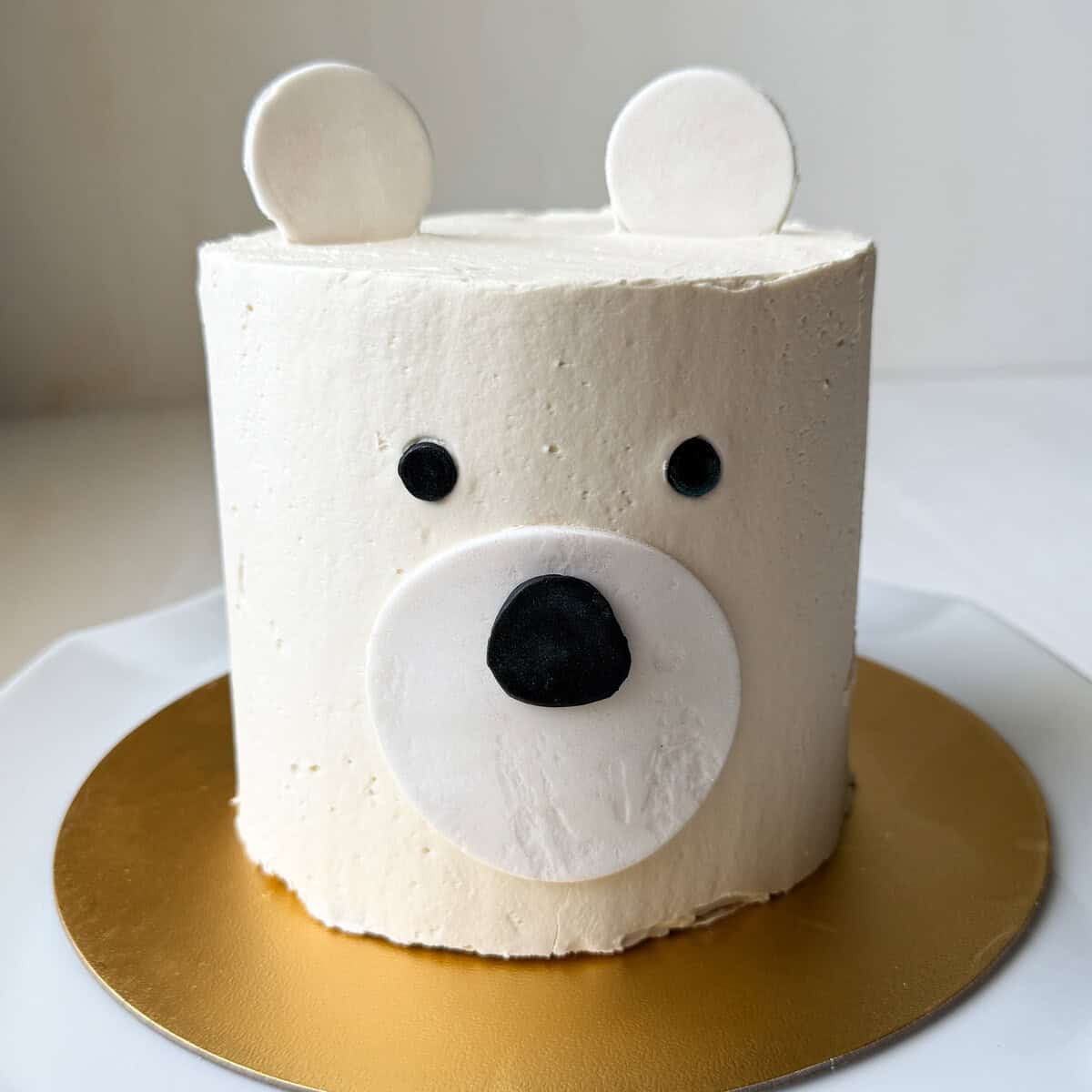
This Polar Bear Cake features a moist vanilla cake with vanilla buttercream and simple black and white fondant decorations. Perfect for a polar bear or teddy bear birthday or baby shower!
My youngest daughter has a polar bear stuffed toy that she has been attached to since she was 18 months old. Her bear is named "Huggie," and she's actually part of a set of Hallmark Kiss Kiss bears. Huggie's brown bear partner is appropriately named "Brown Hug."
For her 9th birthday, also her Golden Birthday, we decided to do a Golden Teddy Bear Birthday Party.
In fitting with her polar bear and brown bear toys, I decided to do all of the desserts in both polar bears and brown bears. That means she ended up having 2 cakes! I scaled them down and made them 6-inch cakes so we didn't end up with loads of leftovers.

I made the Polar Bear Cake as a vanilla cake with vanilla buttercream and the Teddy Bear Cake as a chocolate cake with chocolate buttercream.
The decorations for this cake are simple but still cute and fitting with the theme.
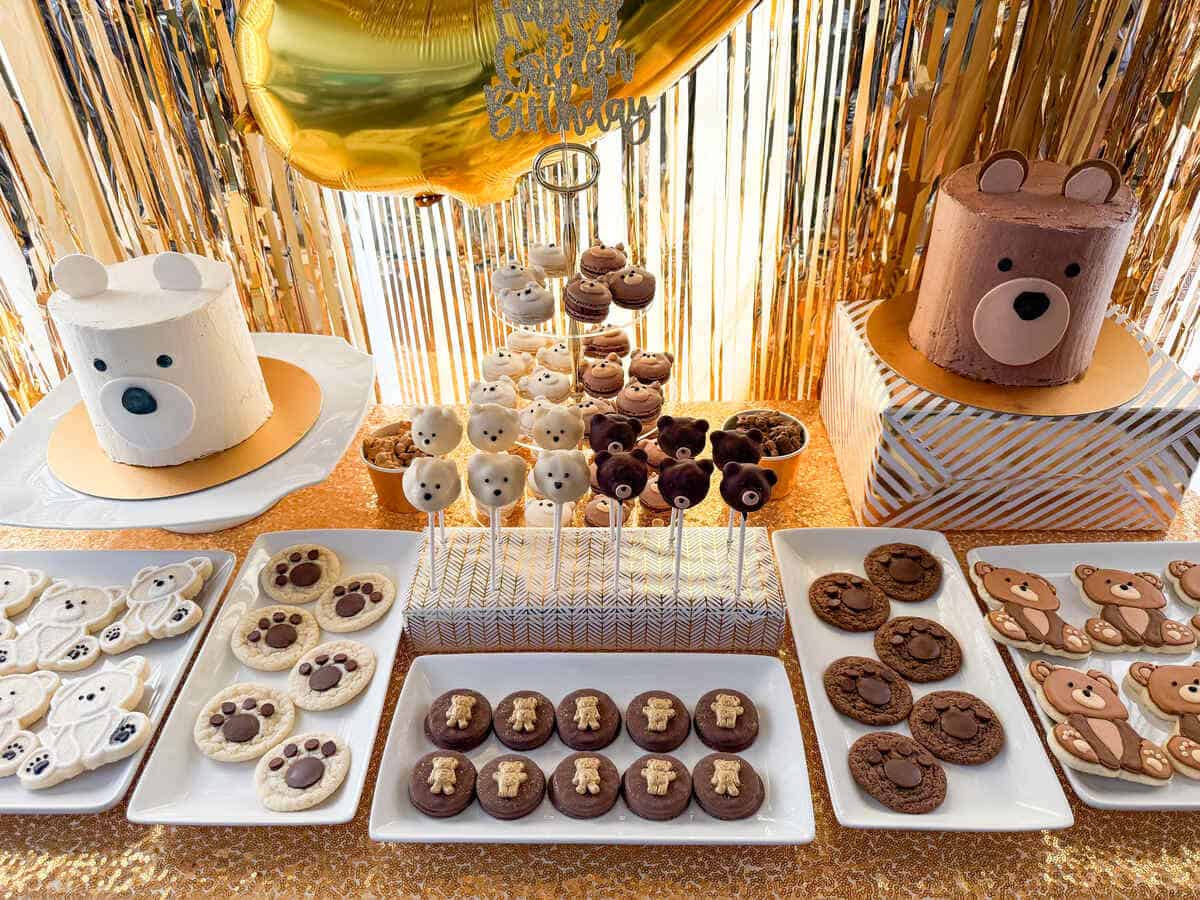
LOOKING FOR MORE POLAR BEAR TREATS? CHECK OUT THESE POLAR BEAR CUPCAKES, POLAR BEAR CAKE POPS, POLAR BEAR PAW COOKIES AND EASY POLAR BEAR COOKIES.
Jump to:
Supplies
- three 6-inch layers of your favorite vanilla cake
- 2 or 3 batches Easy Vanilla Buttercream
- white rollable fondant or gum paste
- black rollable fondant or gum paste
- small fondant rolling pin with guides
- powdered sugar, for rolling the fondant
- small circular biscuit cutter
- large circular biscuit cutter
- round gold cake board
- spinning cake decorating stand
- wooden skewers for support
- metal cake scraper
- large round tip, like 2A
- iridescent edible luster dust, optional
- food grade paintbrush, optional
If you prefer a small amount of buttercream in between the layers of your cake, you can get away with just 2 batches of buttercream. If you like thicker layers of buttercream, I recommend making 3 batches just to be safe, especially if you want a very smooth surface on your cake, which will require a thicker outer layer.
Make the Fondant Ears
Only the fondant ears need to be made in advance because you want them to harden so they stick up. The face should be made when the cake is assembled so it stays soft and molds to the curved shape of the cake.
It's important to make the ears at least a day in advance of assembling the cake so they have time to dry. I made them 2 days before baking the cakes to allow ample drying time.
If you use gum paste instead of fondant, you may not need as much time.
I started by rolling out some white rollable fondant into a thin layer, using a small fondant rolling pin with guides and dusting with powdered sugar to prevent sticking.
Then, I used a small round biscuit cutter to press slightly into the fondant to make the round shape.
Next, I used a sharp paring knife to cut around the circle at the top and then make a long triangle shape on the other side so the ears can be pressed down into the top of the cake.
I made two ears and set them aside to air dry at room temperature.

Bake the Cakes
You can use any vanilla cake recipe that you like or even a boxed cake mix. When I originally made this cake, I used a vanilla cake recipe that uses all butter. It was good but a little drier than I prefer.
I wanted to try a recipe that had both oil and butter. I actually made a blind taste test for my family to compare the King Arthur Classic Birthday Cake and Sugar Spun Run Vanilla Cake. The Sugar Spun Run Cake won by a slim margin, but both cakes were delicious. This is the same recipe I used for this Rainbow Leopard Print Cake.
The King Arthur cake has a very thin batter reminiscent of this Chocolate Layer Cake, while the Sugar Spun Run cake is a thicker batter. My taste testers felt that the King Arthur cake had more vanilla flavor, but the Sugar Spun Run cake was moister and ultimately slightly preferred.

I am including the vanilla cake recipe we prefer in this recipe.
The cake recipe makes four 6-inch cakes. Because I was also making Polar Bear Cake Pops, I decided to bake ¼ of the batter in an 8-inch pan to use for the cake pops. If you are not making cake pops, you can freeze the extra cake to use later in an Easy Boston Cream Pie.
I always use Pam for Baking in my cake pans, unless I'm making the cake gluten free. My cakes unmold beautifully when I use this spray.
I also always use Even Bake Cake Strips so my cakes bake evenly. This means I don't have to level the cakes when assembling. When using these strips, you want them to be wet when you wrap them around the cake pans.
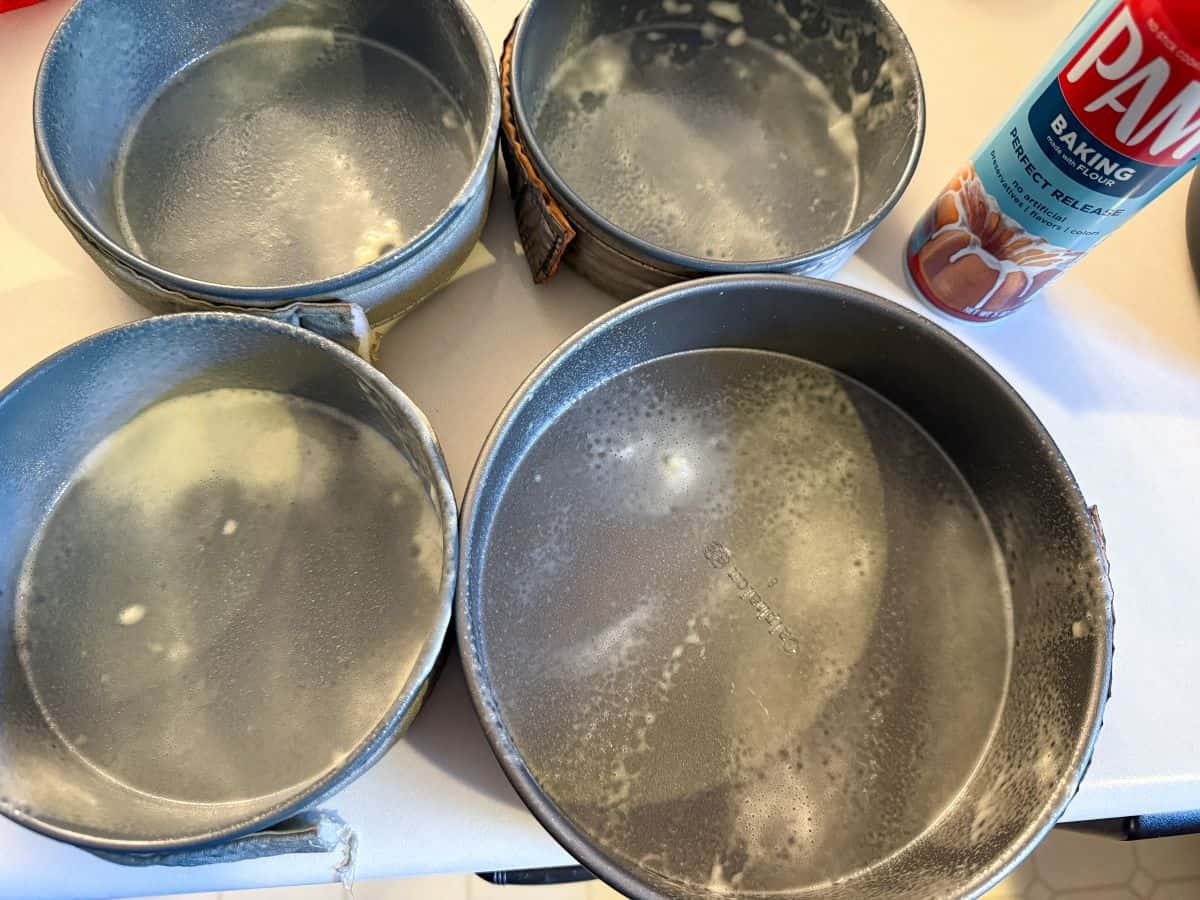
The cakes can be baked, unmolded, and cooled completely before assembly.
Assemble the Cake
For both this Polar Bear Cake and the Teddy Bear Cake, I used gold cake boards to fit with the Golden Birthday theme. I placed the board on a spinning cake decorating stand.
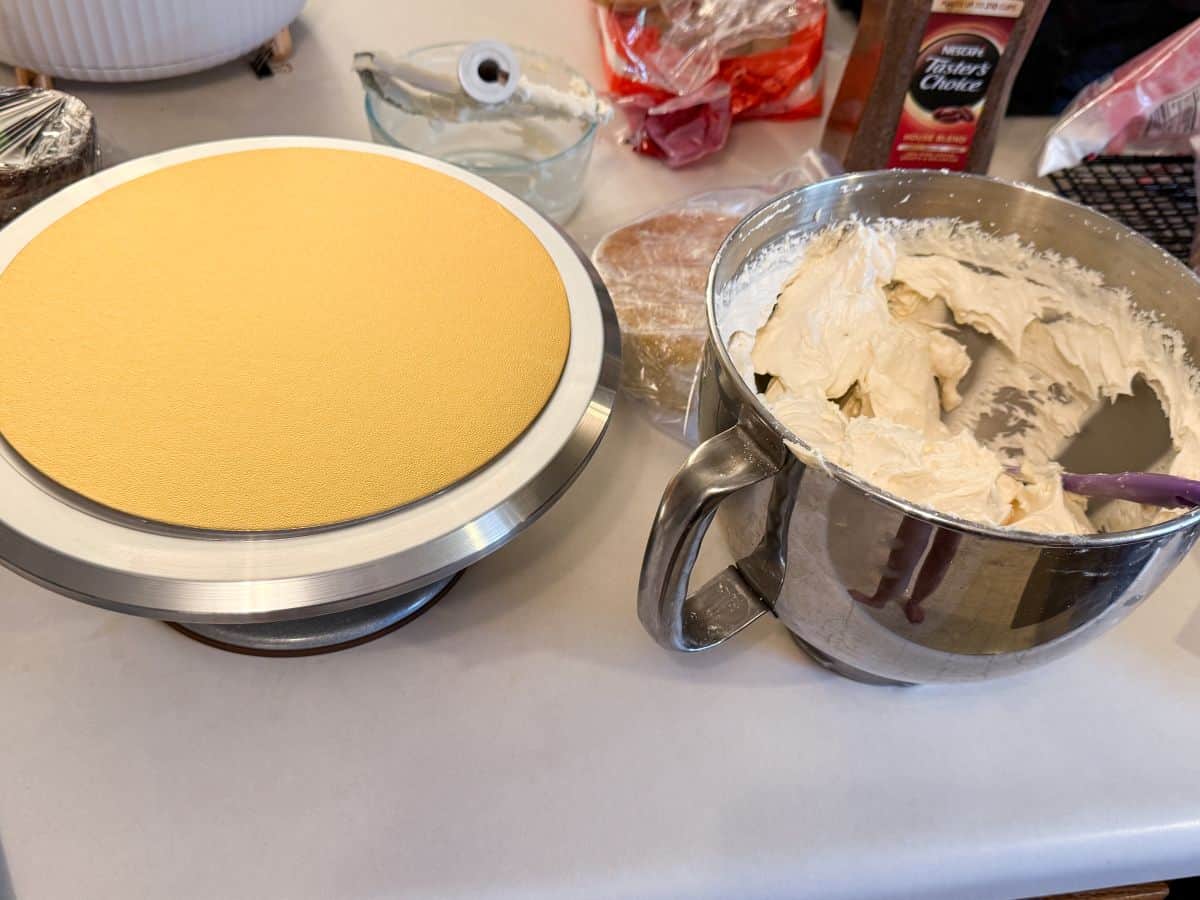
I added some vanilla buttercream onto the cake board to adhere the first cake onto the board and prevent sliding.
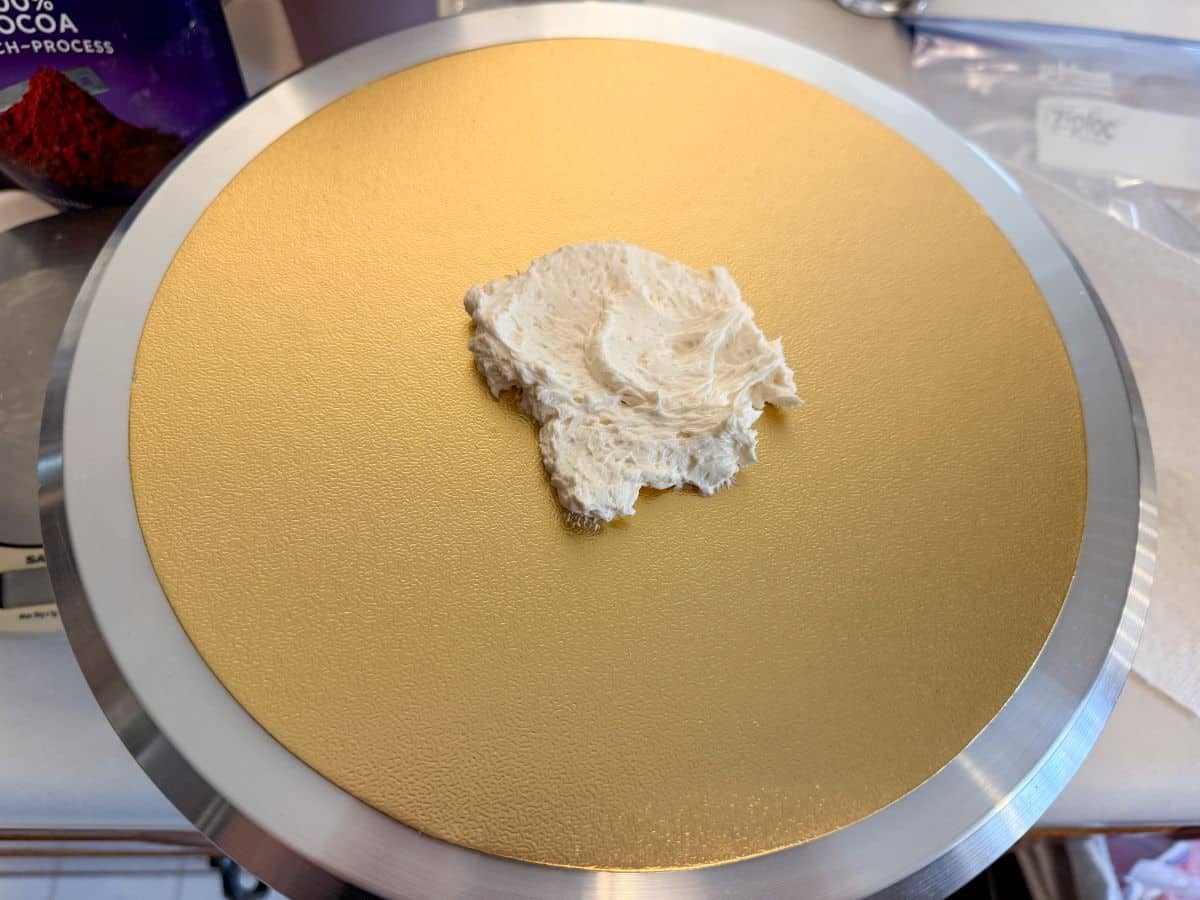
Then, I placed pieces of waxed paper down around the buttercream and put the first cake layer on top. The waxed paper will protect the cake board from getting messy with buttercream. You don't want the paper to be too far under the cake or it will be hard to remove later.

I coated the first cake in a thick layer of buttercream.

Then, I stacked the second cake layer on top and repeated the process until all 3 cake layers were stacked.

I broke three wooden skewers to a size just smaller than the height of the cake and inserted them into the cake in the center and two sides, all in a row. These serve as the supports for the cake to prevent sliding.

I added a thick layer of buttercream to the entire cake.

Then, I used a metal cake scraper and held it at an angle against the side of the cake as I spun the cake stand to smooth the surface, adding extra buttercream to fill in gaps as necessary and smoothing the top as well.
I continued to do this until the surface was as smooth as I wanted. It's up to you how much time you spend on this step.
Another option is to pop the cake in the refrigerator to chill the buttercream and then use a heated metal scraper to smooth the surface. You can heat the scraper by running it under hot water and drying it completely before scraping.
Make the Fondant Face
To make the fondant face, I rolled out white fondant again with a small fondant rolling pin and powdered sugar. I cut the fondant with a large round biscuit cutter.

Then, I used a food grade paintbrush to apply some iridescent edible luster dust to the surface of the white circle and the two ears just to give them some sparkle.

The last step is to make the the eyes and nose. I like to use purchased black fondant when I need black designs, but you can tint the white fondant with black food coloring gel. This is easier for a project where you just need a small amount of black like this one. I highly recommend wearing food-safe nitrile gloves when tinting fondant and rolling it around in your hands like Play-Doh.
Roll the fondant thin and use a large round piping tip, like a 2A, to cut out two eyes. Then, free cut a rounded triangle nose with a sharp paring knife.
To adhere the nose to the white circle, I used some leftover royal icing. You could use a small dot of melted chocolate or white chocolate or even a small amount of buttercream might work, although you would need to be careful and make sure it will stick.

You will want to add the face onto the cake immediately so it doesn't start to harden, as you want the large circle to mold around the curve of the cake.
Add the Fondant Decorations
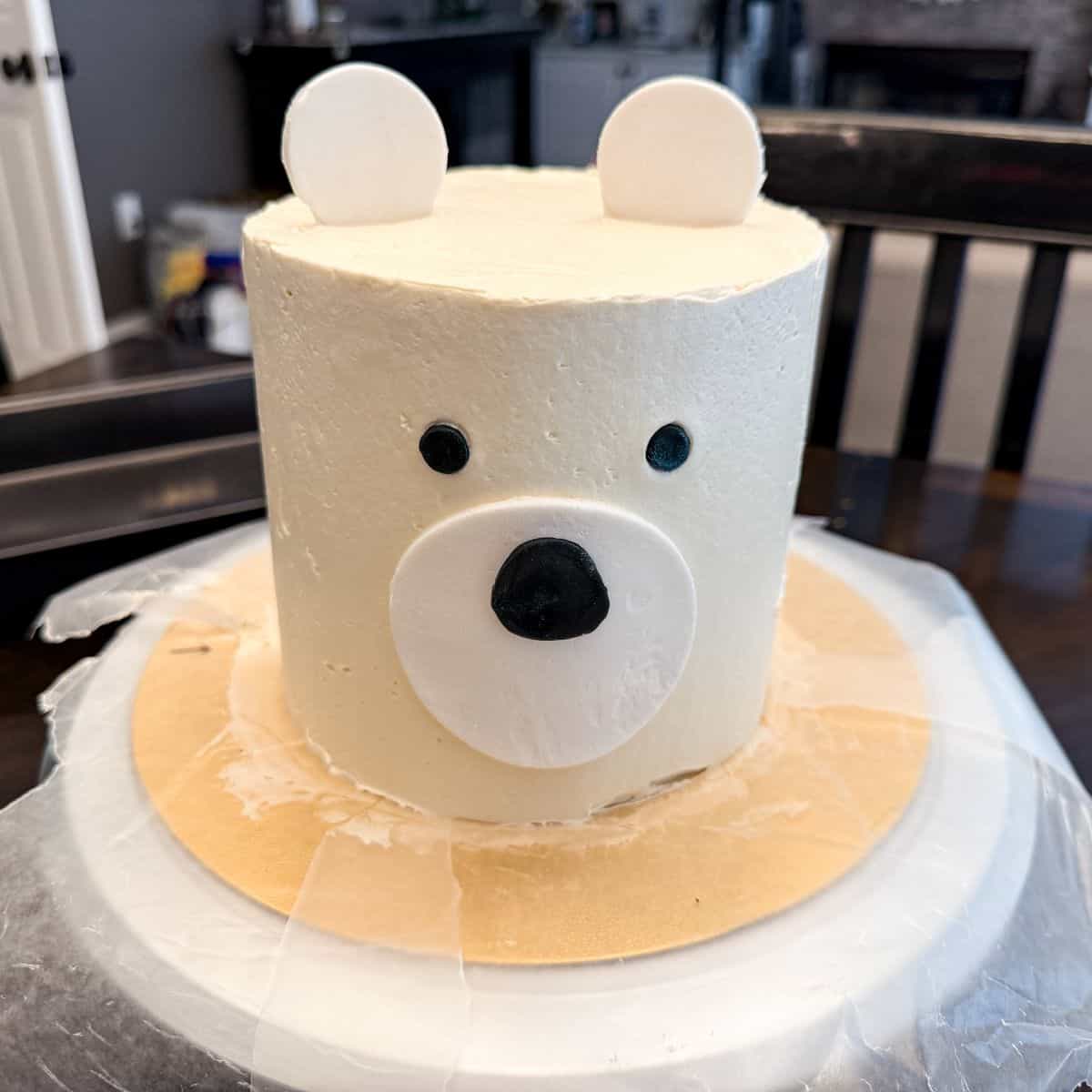
To add the fondant, place the circle on the front of the cake toward the bottom third, with the nose at the top. Then, place the two eyes above the nose.
Last, insert the ears into the top of the cake, pressing until just the rounded portions are visible.

After the cake is completely decorated, carefully remove the waxed paper, moving them back and forth while pulling to prevent the buttercream from sticking. Discard the paper.
Storage
Refrigerate the cake, uncovered, until the buttercream has set. Then, you can cover it carefully with plastic wrap if you want.
Keep the cake refrigerated until a few hours before serving. You want to bring the cake to room temperature before serving for best flavor and texture.
Serving Suggestions
I highly recommend using a long serrated knife to cut the cake for clean slices.

I use a gentle sawing motion at first and then slice through.

Gluten Free Option
Use your favorite gluten free homemade or store bought cake. You can use Bob's Red Mill Gluten Free 1 to 1 Baking Flour in this vanilla cake recipe, although I have not tried it myself yet. I really like King Arthur brand gluten free cake mixes.
📖 Recipe
Polar Bear Cake
Equipment
- 1 8-inch cake pan
- 3 6-inch cake pans
- 4 Even Bake Cake Strips
- 1 small fondant rolling pin with guides
- 1 small circular biscuit cutter
- 1 large circular biscuit cutter
- 1 round gold cake board
- 1 large round piping tip like 2A
- 1 food grade paint brush optional
Ingredients
For the Vanilla Cake:
- 3 cups all purpose flour
- 1 tablespoon baking powder
- ½ teaspoon salt
- ½ cup butter (at room temperature)
- ½ cup vegetable or canola oil
- 1½ cups sugar
- 4 large eggs (at room temperature)
- 1 tablespoon vanilla extract
- 1¼ cups buttermilk (at room temperature)
For Decorating:
- 2-3 batches Easy Vanilla Buttercream (see note)
- white rollable fondant or gum paste
- black rollable fondant or gum paste
- powdered sugar (for rolling fondant)
- iridescent luster dust (optional)
Instructions
Make the Fondant Ears:
- It is important to make the ears at least a day in advance of assembling the cake so they have time to dry. If you use gum paste instead of fondant, you may not need as much time.
- Lightly dust a work surface with powdered sugar. Roll out white fondant into a thin layer using a small fondant rolling pin with guides for even rolling. Press a small biscuit cutter lightly into the fondant to make an impression. Cut around the circle on one side and make a long triangle shape on the other side with a sharp paring knife. Repeat to make a second ear.

- Set the ears aside to dry at room temperature.
Bake the Cakes:
- Preheat oven to 350°F.
- Add moist cake baking strips around one 8-inch and three 6-inch round cake pans.
- Spray the pans with non-stick baking spray containing flour, such as Pam for Baking. Alternatively, line the bottoms of the pans with parchment paper and grease and flour the sides of the pan and the parchment. Set aside the pans.

- In a medium bowl, sift together the flour, baking powder, and salt. Set aside.
- In the bowl of stand mixer, beat the butter, oil, and sugar until fully combined.
- Add the eggs one at a time. Beat thoroughly after each egg.
- Add the vanilla extract and mix until fully incorporated.
- Using a large rubber spatula, fold in ⅓ of the dry ingredients.
- Add half of the buttermilk and fold until combined, then add another ⅓ of the dry ingredients, followed by the remaining buttermilk and ending with the rest of the dry ingredients. Small lumps of flour will remain. Take care not to overmix.

- Divide the batter evenly between the four pans.
- Bake the cakes for 15-30 minutes or until a toothpick inserted into the center comes out clean. This time will vary depending on the size of your cake pans and the thickness of the batter. Reduce the baking time for thin layers. You do not want to overbake this cake, or it will taste dry.
- Remove the pans from the oven, take off the cake baking strips, and allow them to cool for 10 minutes, then invert the cakes onto cooling racks to cool completely. Use the 8-inch cake to make cake pops or wrap in plastic wrap and store in freezer in a resealable gallon-sized freezer bag for a later use.
Assemble the Cake:
- Place a 10-inch round cake board on a spinning cake decorating stand.

- Add a small mound of buttercream to the center of a cake board.

- Place pieces of waxed paper down around the buttercream and put the first cake layer on top. The waxed paper will protect the cake board from getting messy with buttercream. You don't want the paper to be too far under the cake or it will be hard to remove later.

- Cover the top of the cake with an even layer of buttercream.

- Stack another 6-inch cake on top and repeat until all three layers have been stacked.

- Break three wooden skewers to a size just smaller than the height of the cake and insert them into the cake in the center and two sides, all in a row. These serve as the supports for the cake to prevent sliding.

- Apply a thick layer of buttercream to the entire cake.

- Hold a metal cake scraper at an angle against the side of the cake while spinning the cake stand to smooth the surface, adding extra buttercream to fill in gaps as necessary and smoothing the top as well. Repeat this process until the surface is as smooth as you want. Another option is to pop the cake in the refrigerator to chill the buttercream. Then run the metal scraper under hot water to heat it, dry it off, and smooth the surface of the buttercream with the heated scraper.
- To make the fondant face, roll out white fondant with a small fondant rolling pin and powdered sugar. Cut the fondant with a large round biscuit cutter.

- To give the fondant some sparkle, use a food grade paintbrush to apply some iridescent edible luster dust to the surface of the white circle and the two ears (optional).

- Roll black fondant into a thin layer and use a large round piping tip, like a 2A, to cut out two eyes. Free cut a rounded triangle nose with a sharp paring knife.
- Place a dot of royal icing, melted chocolate or white chocolate, or buttercream on the back of the black nose. Place the nose toward the top of the large white circle.

- Place the circle on the front of the cake toward the bottom third, with the nose at the top. Place the two eyes above the nose.
- Insert the ears into the top of the cake, pressing until just the rounded portions are visible.

- Carefully remove the waxed paper, moving each piece back and forth while pulling to prevent the buttercream from sticking. Discard the paper.
- Refrigerate the cake to set the buttercream before covering loosely with plastic wrap.

Leave a Reply