
This Nut Free Pesto is based on a French pistou with fresh basil and olive oil. This is great for an allergy friendly alternative to traditional pesto.

In the intense heat of mid to late summer, growing large amounts of fresh basil is easy to do and leaves you looking for ways to use it. So many of my favorite summer recipes include basil, like Panzanella, Double Tomato Bruschetta, Parmesan Basil Orzo, Sun Dried Tomato Pasta and Fresh Tomato Pasta.
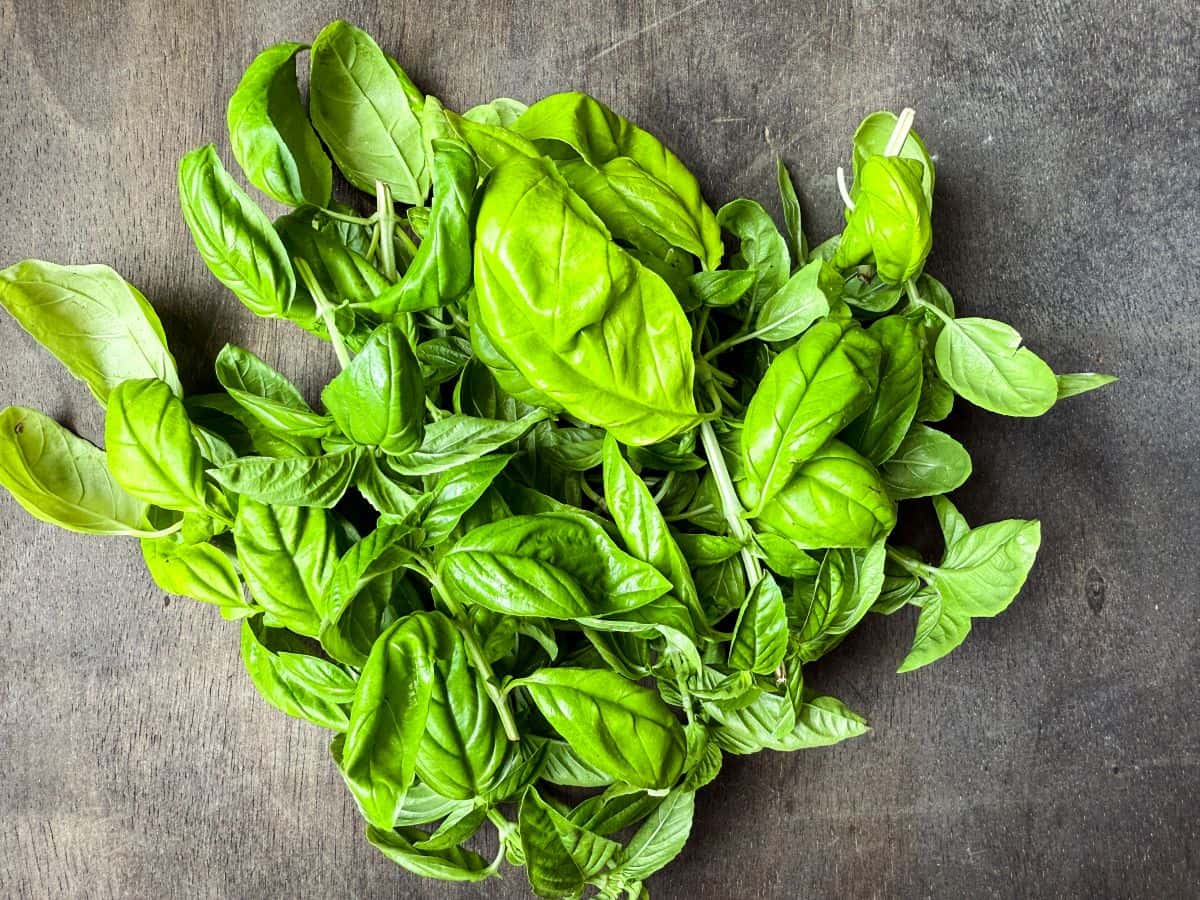
One of the best ways to use up massive quantities of fresh basil is to make pesto. Traditional pesto contains pine nuts but can be made with other kinds of nuts like walnuts or even sunflower seeds.
Due to my allergy to all tree nuts and sunflower seeds, I must make a Nut Free Pesto, like I did when I developed the recipe for this Chicken Pizza with Nut Free Pesto so many years ago.
To do this, I turned to recipes for pistou, a French version of pesto that does not contain nuts. Pistou has many applications, including David Lebovitz's "soupe au pistou."
I based my recipe off of Classic Pistou from Food & Wine but added more olive oil to make it the consistency of sauce, used Parmesan for the cheese, and skipped the tomatoes.
What I love about this recipe is that it can be adjusted for what you plan to do with it. It can easily be frozen in small portions for later use so you can enjoy fresh pesto year round.
Ingredients
- fresh garlic
- fresh basil
- freshly grated Parmesan cheese
- extra virgin olive oil
- salt and pepper

The amount of olive oil is going to depend on your preference and also what you plan to do with your pesto. When I'm using pesto as a sauce for pizza, I want it to have more oil so it spreads easier.
On the other hand, when I'm using pesto to toss with pasta, I find it doesn't need as much oil, so I make it thicker.
I like using freshly grated Parmesan cheese here rather than the pre-grated cheese from the store. You can also adjust the amount of Parmesan cheese. This recipe is so forgiving and can be customized to your specific taste.
I recommend adding salt and pepper at the end. The amount of salt it needs, if any, will depend on how much cheese you use. I also find different brands of Parmesan contain different amounts of salt.
You may also want to consider what you're using the pesto for when determining the salt level. For example, you'll need more salt if using the pesto on pasta.
Blend the Pesto
Traditional pistou recipes call for a mortar and pestle to crush the garlic into a paste and then add the basil leaves. While I have done this, I now like to just dump everything into a food processor.
One tip I have for the garlic to give it a paste-like consistency that you achieve with a mortar and pestle is to grate it. I use a microplane grater that is meant for zesting citrus or even the finer grating side of a box grater.
Start with the smaller amount of olive oil, blend, then determine if you need more. This will depend on the quantity of cheese you use and how thick you want your final pesto.
Uses
As I have already mentioned, I use pesto as a sauce on pizza or I toss it with pasta. I also like to add it on top of grilled or sauteed chicken with some marinara sauce or fresh tomato slices and melt mozzarella cheese on top for a fancy Chicken Parmesan.

You can also add the pesto to bruschetta or spread it over French or Italian bread and broil to make a quick garlic bread, with or without provolone cheese broiled on top. It can be drizzled over Caprese Salad Skewers or Feta Caprese Salad, or used as a spread on a caprese style sandwich or Bruschetta Grilled Cheese Sandwiches.
Storage
Store the pesto in a sealed container, such as a lidded mason jar, in the refrigerator for about a week.
To freeze, portion out in small amounts using an ice cube tray. Freeze, then dump the cubes into a gallon sized freezer bag and seal.
Gluten Free
This recipe is naturally gluten free.
📖 Recipe

Nut Free Pesto
Ingredients
- 2 cloves garlic
- 2 cups fresh basil (washed and loosely packed)
- ½ cup freshly grated Parmesan cheese
- ¼ cup extra virgin olive oil (see note)
- salt and pepper (to taste)
Instructions
- Grate the garlic with a fine grater such as a microplane zester.
- Add all of the ingredients to a food processor, drizzling the olive oil in last. Blend until a sauce or paste-like consistency is achieved.
- If using the pesto for pizza sauce, you can add more olive oil to achieve a sauce-like consistency. I use double the amount of oil for pesto that will be a pizza sauce. For pasta, you want a thicker consistency with less oil.
- Adjust the salt and pepper to taste. You may find it does not need salt depending on how much Parmesan cheese you use.
- Store the pesto in a sealed container, such as a lidded mason jar, in the refrigerator for about a week. To freeze, portion out in small amounts using an ice cube tray. Freeze, then dump the cubes into a gallon sized freezer bag and seal.


Leave a Reply