
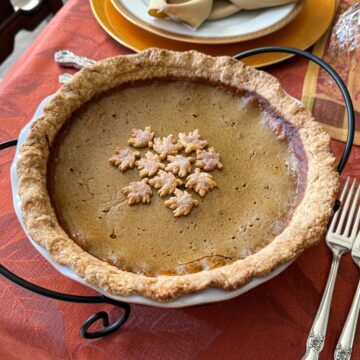
This All Butter Pie Dough for a Single Crust Pie is ideal for custard or cream pies, crumb topped pies, pumpkin pie, pecan pie or quiche. It is a flaky and flavorful crust without vegetable shortening.
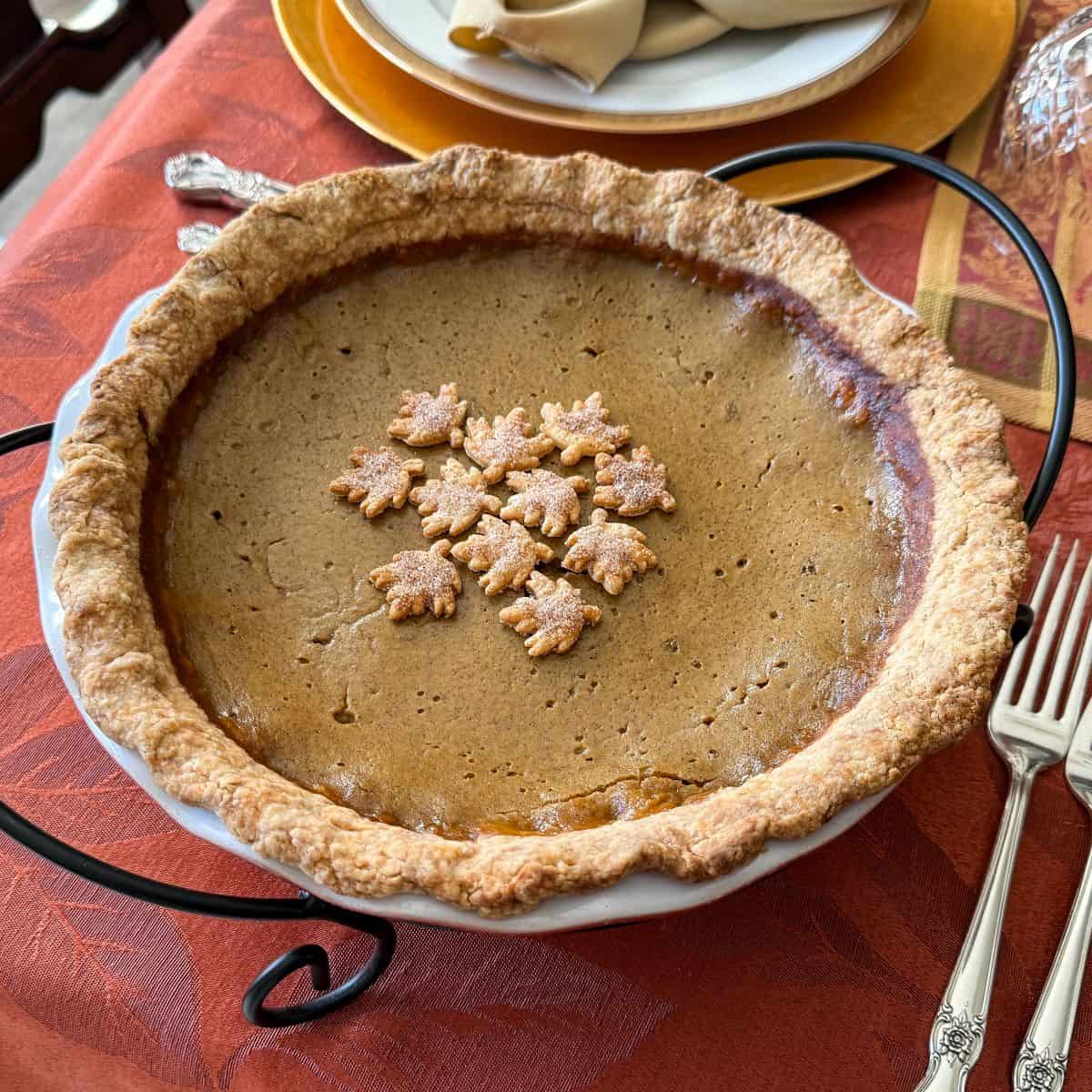
This all butter pie dough is my go-to recipes for homemade pies. The crust is buttery and flaky. Many times, I make the dough for a double crust pie, like Peach Pie, Blueberry Pie, Apple Pie, or Chicken Pot Pie.
For pies like Pumpkin Pie, Pecan Pie, Quiche, and even a crumb topped fruit pie, only a single bottom crust is needed. Depending on the recipe, the bottom crust may need to be par-baked or blind baked.
Par-baking refers to partially baking a bottom crust before adding a filling that will also be baked, like Pumpkin Pie. Blind baking is completely baking a bottom crust before adding a filling that will not be baked, like a cream pie.
You can also use this recipe for pie crust decorations like Painted Pie Crust Leaves or for Cinnamon Sugar Pie Dough Cookies.
Jump to:
Prepare the Butter
Very cold butter creates a flaky pie crust. For that reason, the butter is diced into ¼-inch pieces and then placed in the freezer for 10 to 15 minutes.
This recipe calls for unsalted butter and table salt added into the flour mixture. After comparing unsalted and salted butter on my own in many applications, I now exclusively buy salted butter. For pie dough, I just reduce the amount of salt in the recipe. Either type of butter will work.
Make the Dough
Another way to keep the butter cold for a flaky crust is to use ice water. In this recipe, ice water is mixed with sour cream in a small bowl until well combined. This is set aside.
The flour, sugar and salt are blended together in a food processor. Then, the cold butter pieces are scattered over the top and pulsed until the butter is the size of large peas.
Next, half of the ice cold sour cream mixture is poured over the flour mixture and pulsed until incorporated, followed by the remaining sour cream mixture.
At this point, you will want to pinch the dough with your fingers. If the dough feels dry and does not hold together, sprinkle a small amount of ice water over the mixture and pulse until the dough forms large clumps. I find that the time of year affects whether I need to add extra water and how much. The temperature and humidity have an impact, so keep that in mind.
Gather the dough together and wrap dough in plastic wrap, forming into a 4-inch disk before refrigerating.
Roll the Dough
When the dough has been chilled for a bit, it can be rolled out and fitted to the pie plate. Alternatively, the dough can be saved for later use in the refrigerator or freezer.
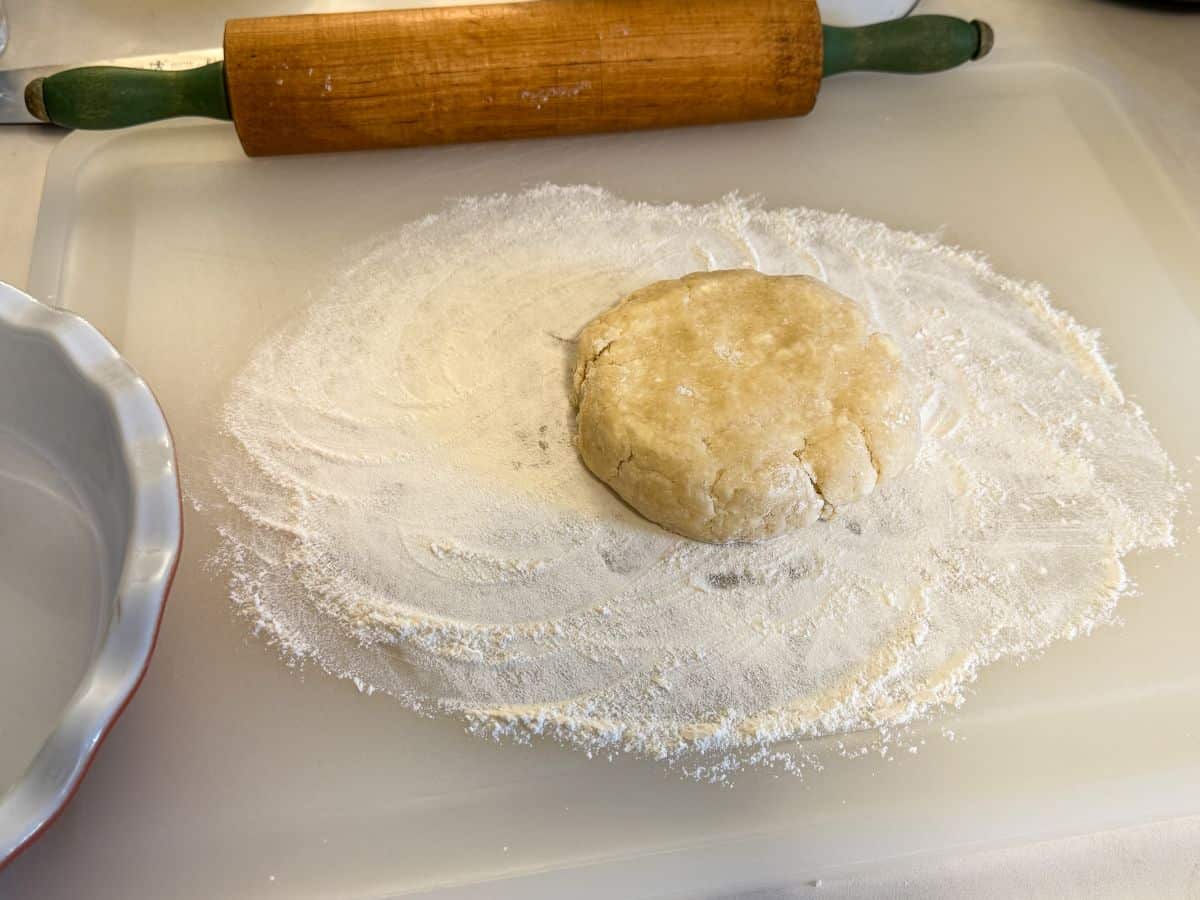
The disk can be placed onto a floured cutting board and rolled to an even thickness into approximately a 12-inch circle.
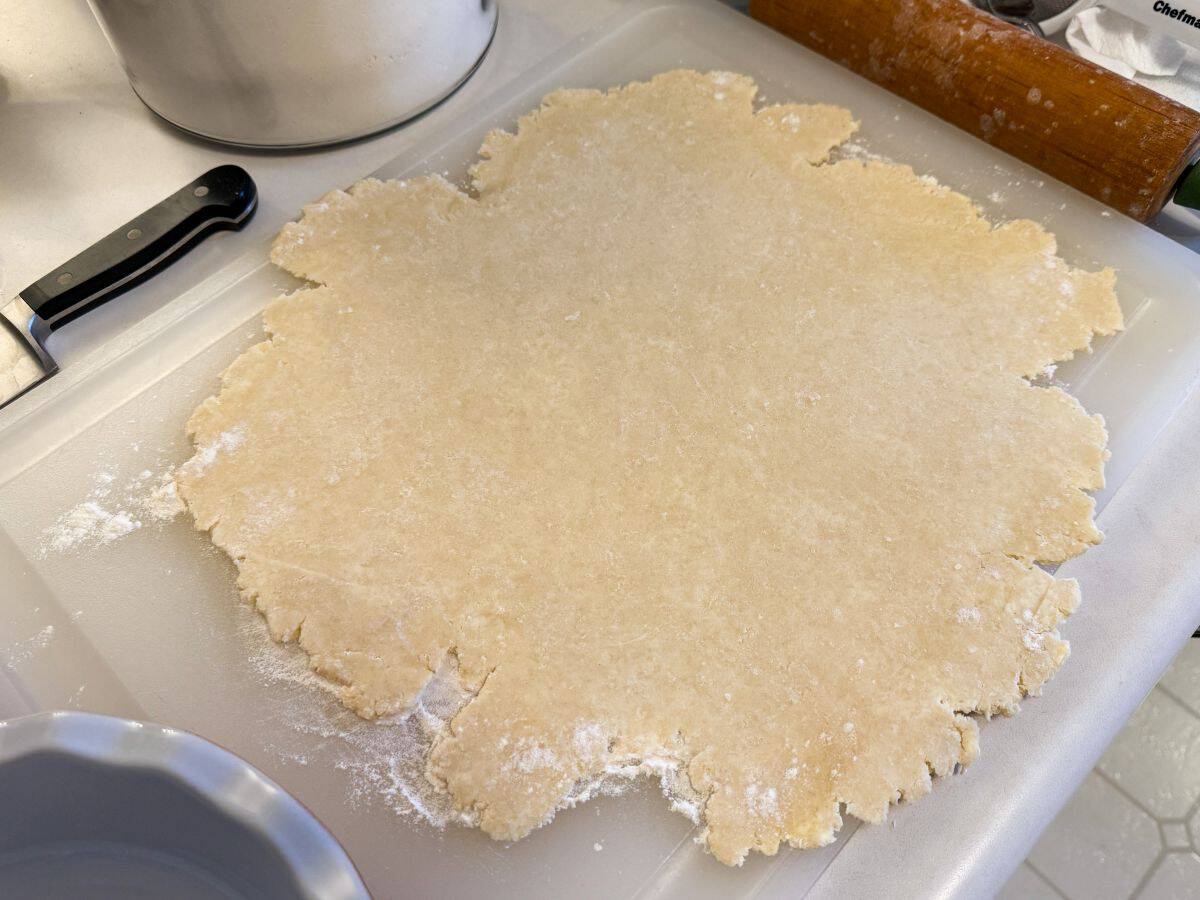
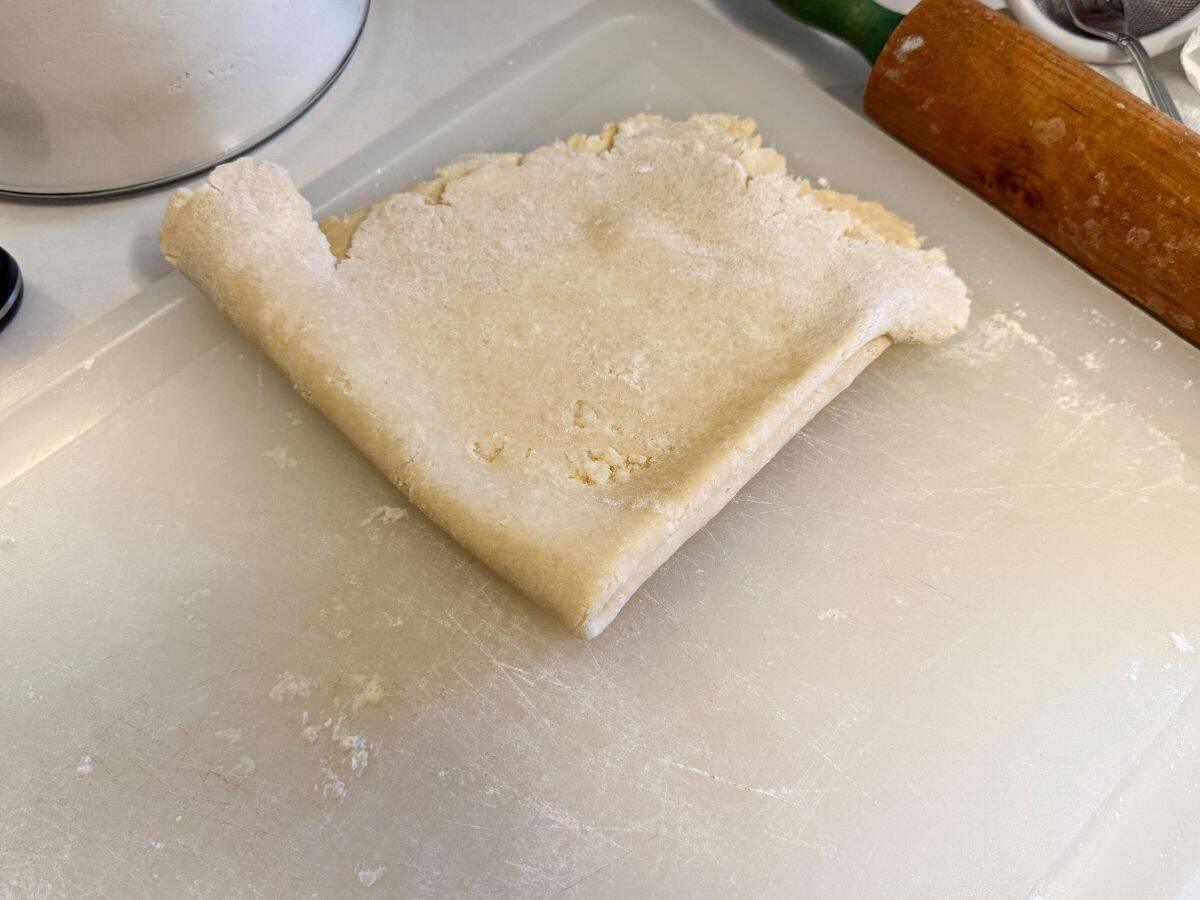
The dough can be folded into fourths and then transferred to the pie plate and carefully unfolded. Alternatively, roll the dough around the rolling pin to aid in transferring it to the pie plate.
Any cracks can be pressed together, then the top edge can be trimmed to overhang by 1-inch, folded over and crimped. Cover and chill the dough for at least 30 minutes.
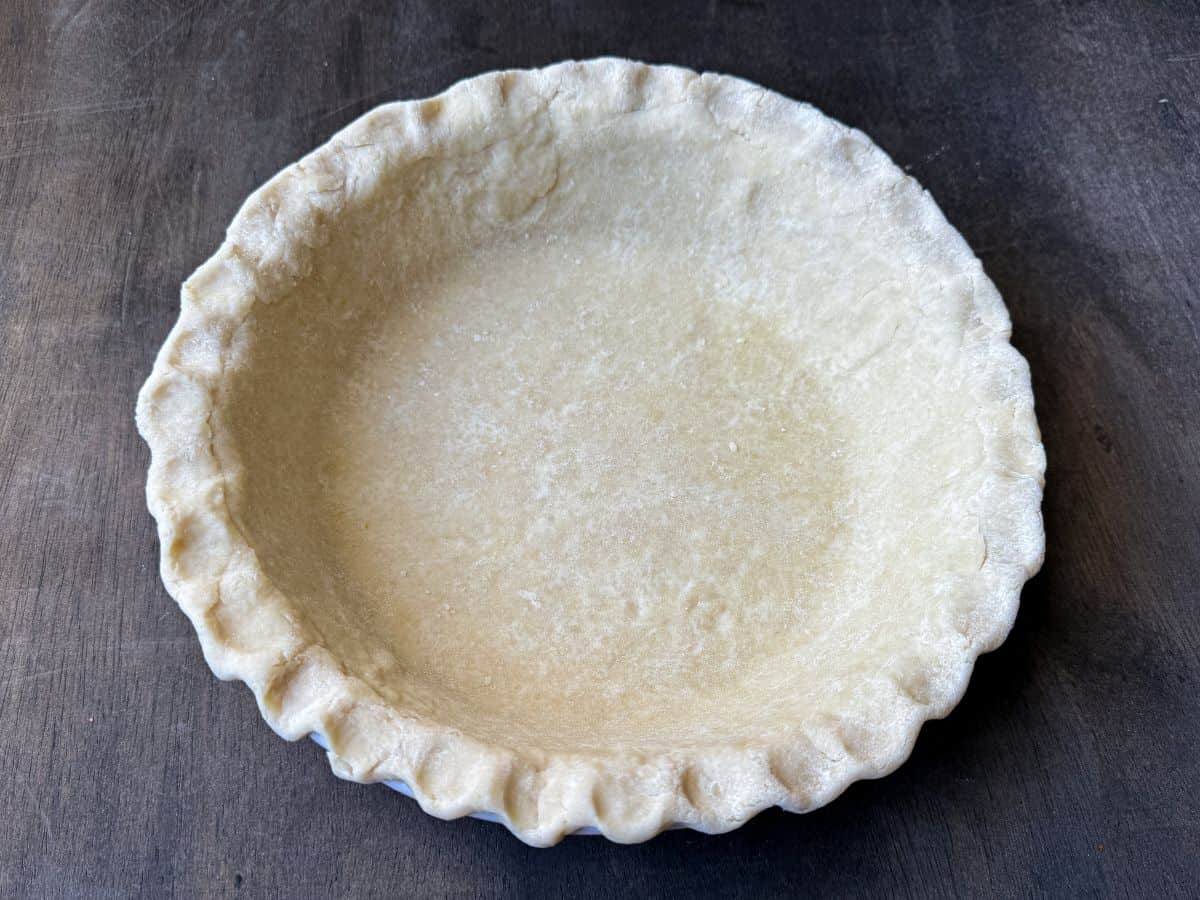
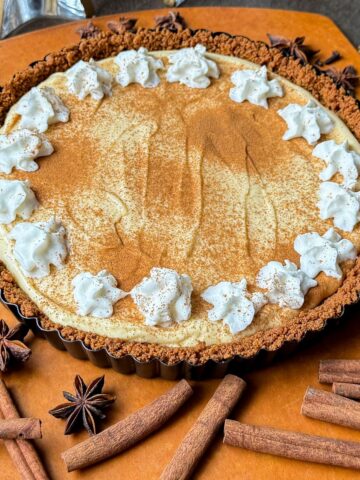
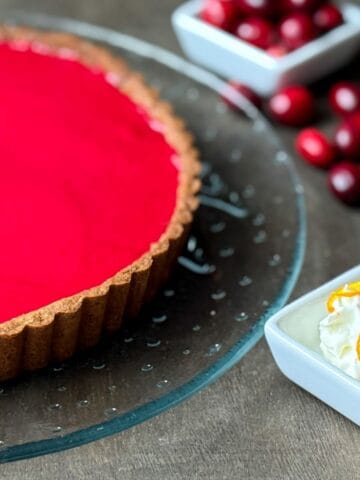
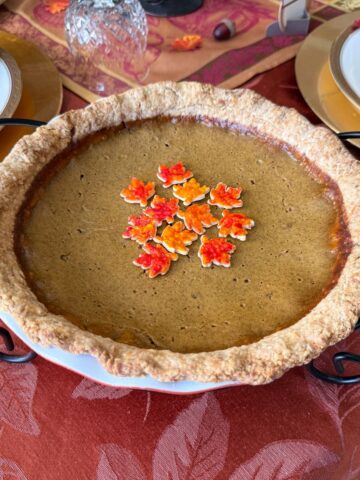
This dough can be used as the bottom crust of a crumb topped fruit pie, like peach, blueberry, or apple, or as the bottom crust of a cold custard pie, a cream pie or a baked custard pie, like pecan or pumpkin.
Par-Baking and Blind Baking
Par-baking is the term used for partially baking an empty pie crust that will be baked again with filling, ultimately in an effort to avoid an undercooked or soggy crust. Par-baked crusts are good for pies that have very wet fillings, like Classic Quiche and Pumpkin Pie.
Blind baking refers to baking an empty crust completely that will be filled with a no-bake filling, like a cream pie.
For both par-baking and blind baking, the method is the same. A blind baked crust is just baked longer.
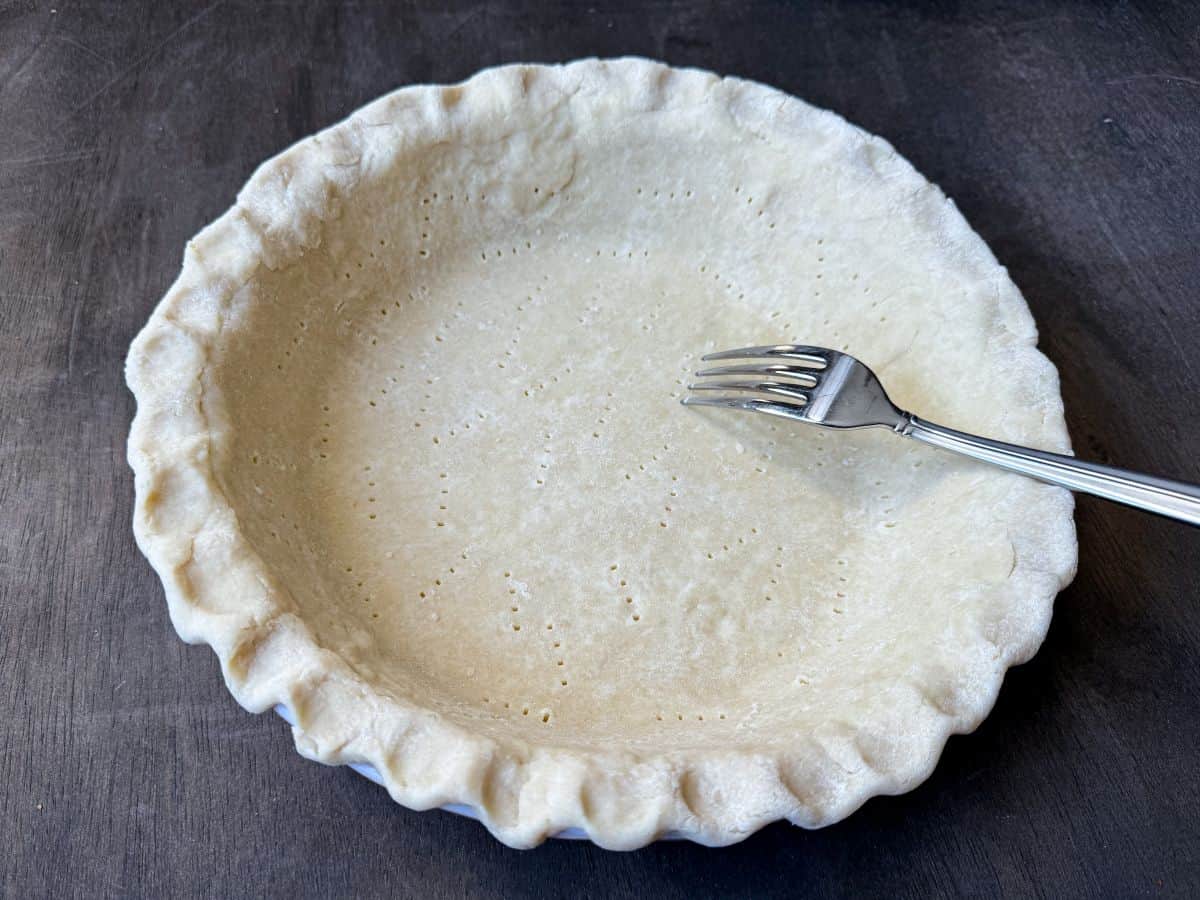
First, the chilled dough in the pie plate is pricked all over with a fork. This creates holes for steam to escape so the crust doesn't puff up during baking.
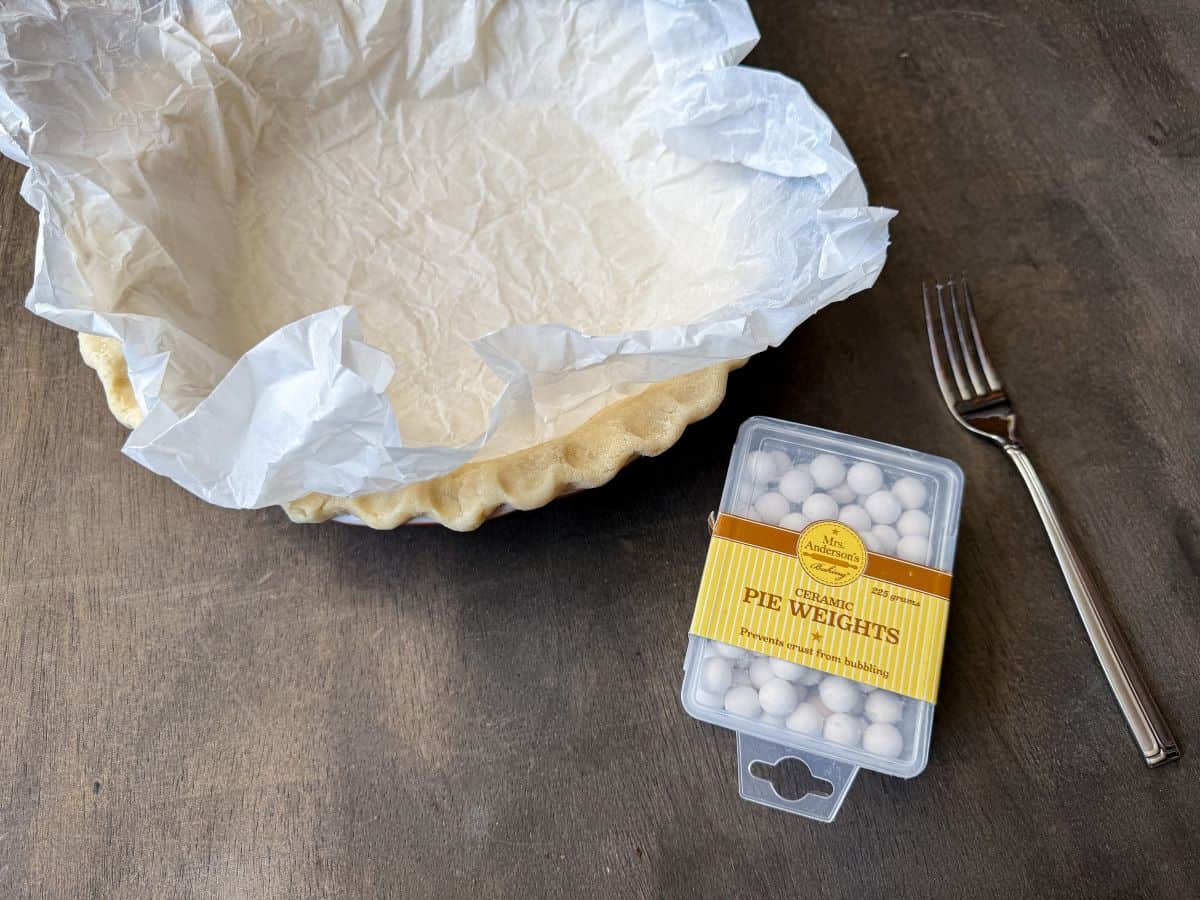
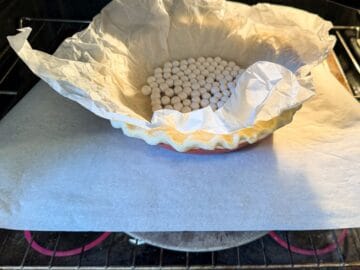
Crumple a piece of parchment paper and then flatten it and place it inside of the pie plate.
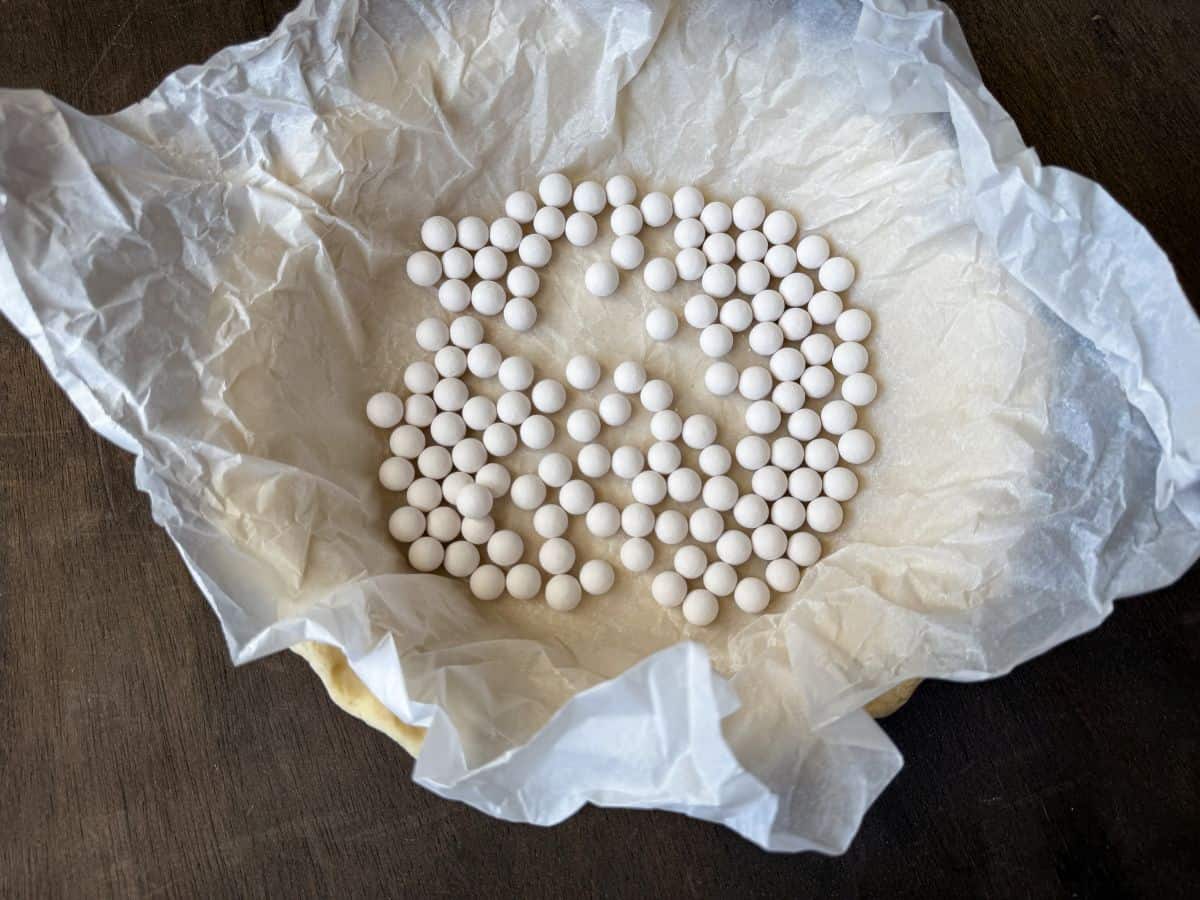
Pour pie weights on top of the paper and spread them evenly. The pie weights also help prevent the crust from puffing.
Place the pie plate on a parchment lined cookie sheet and place it in the oven.
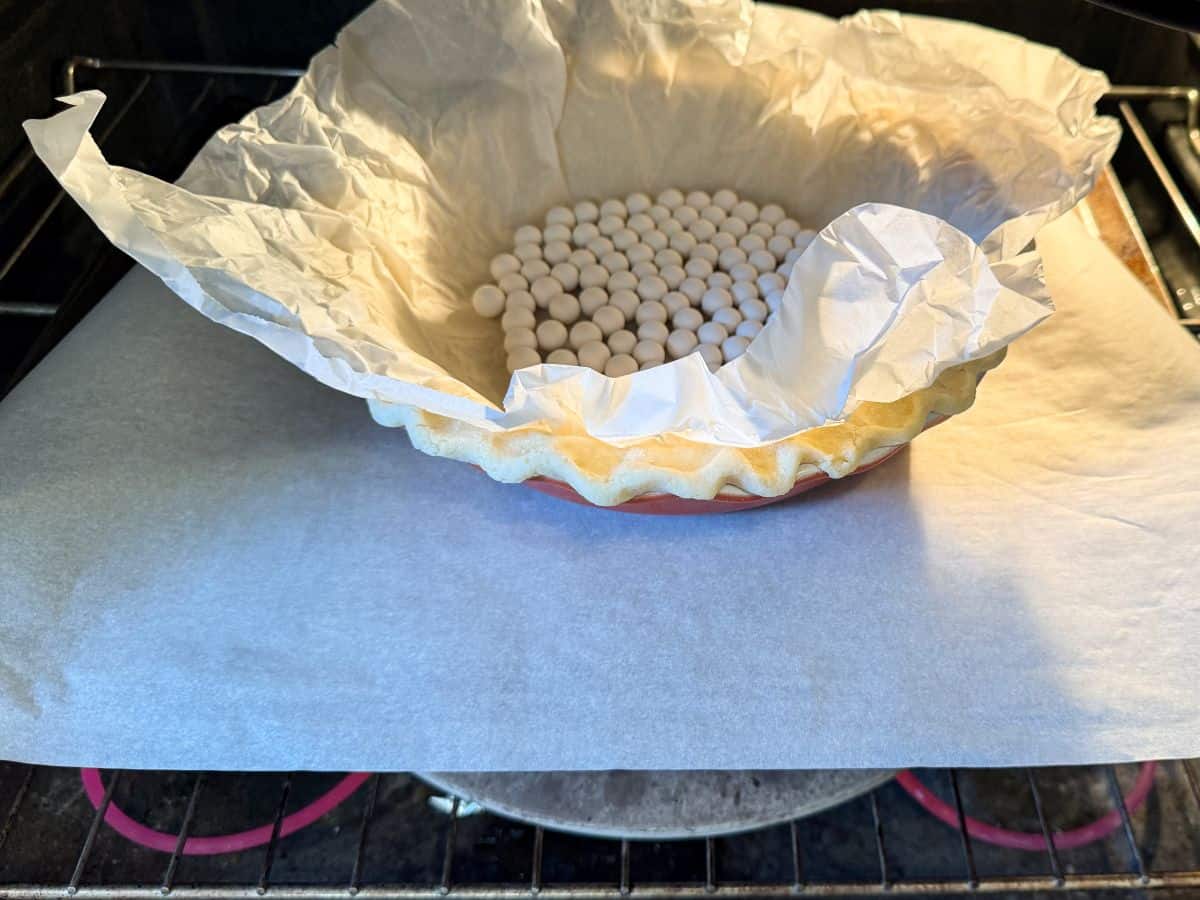
Bake for 20 to 25 minutes, until edges are golden.
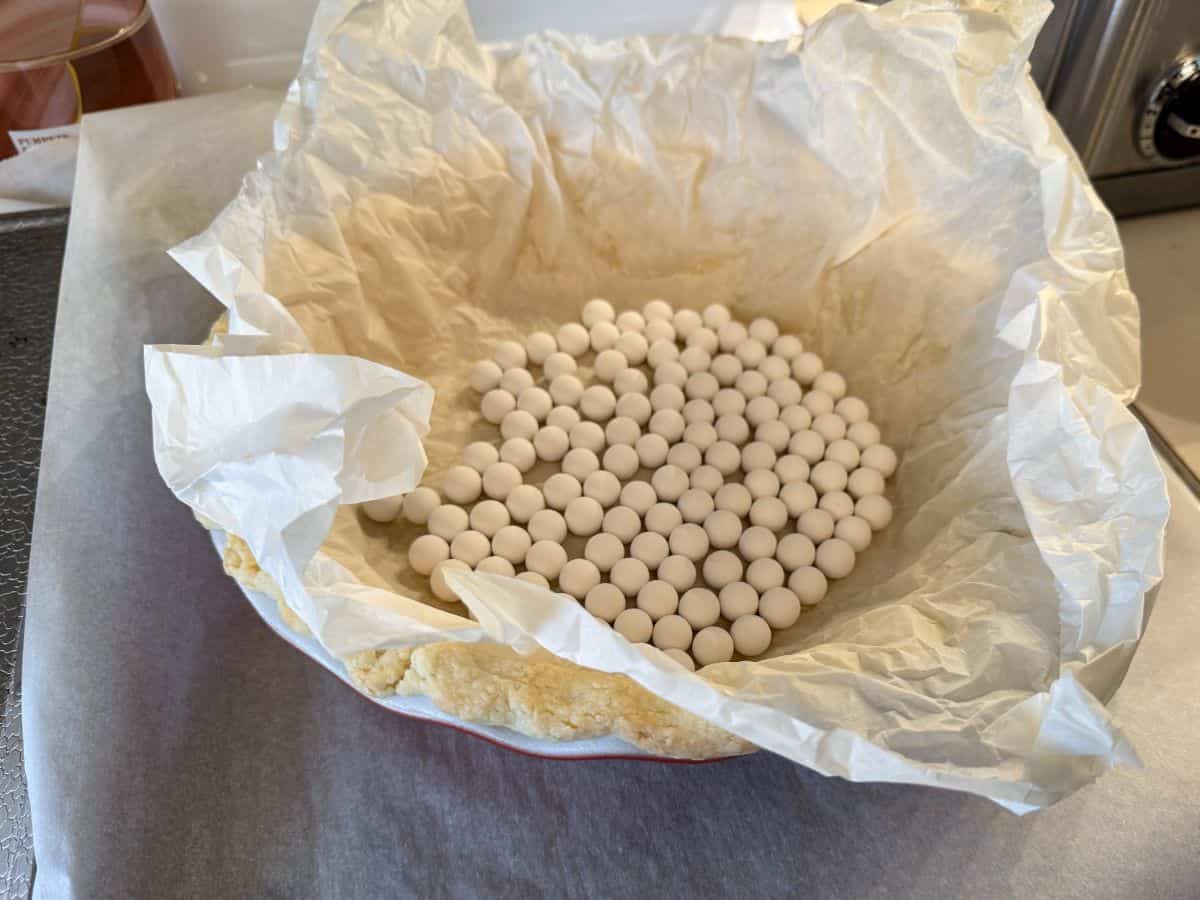
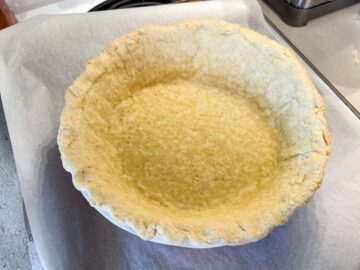
Then, carefully remove the parchment and weights.
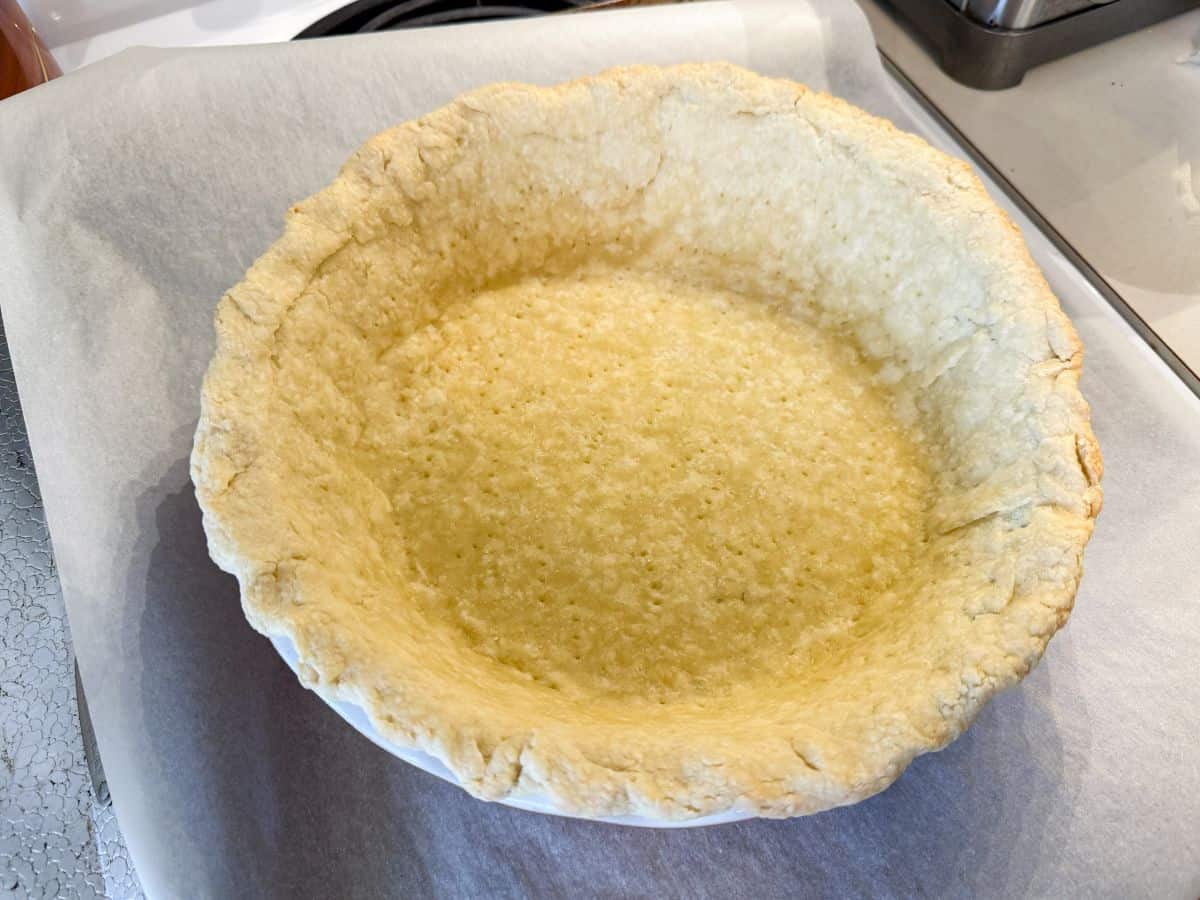
Return the crust, still on the baking sheet, to the oven for 5 to 10 minutes, until the bottom looks matte.
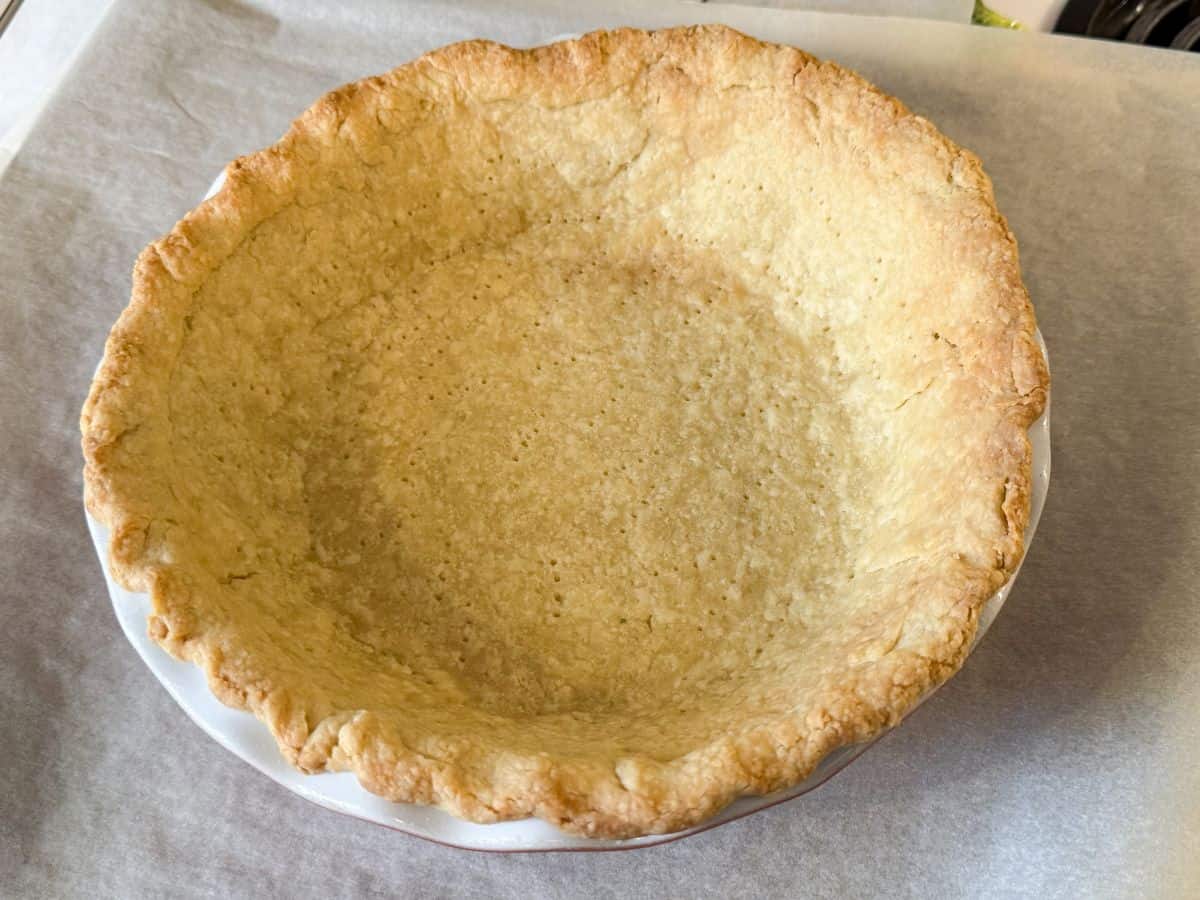
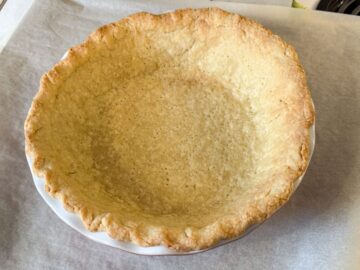
If you are blind baking the crust, continue to bake until the crust is fully cooked and golden brown. You an add an aluminum foil ring around the edges to prevent excess browning if the bottom crust is not baking as fast as the top.
After the crust is finished baking, transfer the pie plate to a wire rack to cool. Proceed with your pie recipe.
Gluten Free Option
Use a gluten free flour blend, such as Bob's Red Mill Gluten Free 1 to 1 Baking Flour, in place of all purpose flour for an entirely gluten free crust. I do this for Gluten Free All Butter Double Crust dough.
The dough may be drier and require more ice water to come together. It will be more fragile than dough made with all purpose flour, but the flavor will be the same. If cracks form when transferring the dough to the pie plate, just squeeze the dough back together and patch as necessary.
📖 Recipe
All Butter Pie Dough for a Single Crust Pie
Ingredients
- 8 tablespoons unsalted butter (cut into ¼-inch pieces)
- 2 tablespoons plus 2 teaspoon ice water (plus extra as needed)
- 1½ tablespoons sour cream
- 1¼ cups unbleached all purpose flour (plus extra for the work surface)
- ½ tablespoon sugar
- ½ teaspoon table salt (less for salted butter)
Instructions
- Place the diced butter in the freezer for 10 to 15 minutes.8 tablespoons unsalted butter
- Mix ice water and the sour cream in a small bowl until combined.2 tablespoons plus 2 teaspoon ice water, 1½ tablespoons sour cream
- Process the flour, sugar and salt together in a food processor until combined.1¼ cups unbleached all purpose flour, ½ tablespoon sugar, ½ teaspoon table salt
- Scatter the butter pieces over the top and pulse the mixture until the butter is the size of large peas, about 10 pulses.
- Pour half of the sour cream mixture over the flour mixture and pulse until incorporated, about 3 pulses. Repeat with the remaining sour cream mixture.
- Pinch the dough with your fingers. If the dough feels dry and does not hold together, sprinkle ½ to 1 tablespoon more ice water over the mixture and pulse until the dough forms large clumps and no dry flour remains, 3 to 5 pulses.
- Wrap dough in plastic wrap, forming into a 4-inch disk before refrigerating.
To Par-Bake or Blind Bake the Crust:
- Roll the chilled dough on a floured surface into a 12-inch circle.
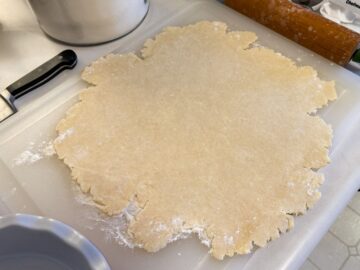
- Fold the dough into fourths and transfer to a 9-inch pie plate. Fit the crust into the pie plate and trim the edges to leave a 1 inch overhang. Fold the dough under itself and crimp.
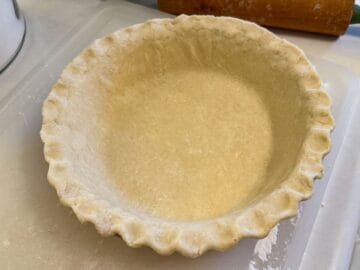
- Cover and chill for at least 30 minutes. Meanwhile, adjust an oven rack to the middle position and preheat the oven to 375°F.
- Prick the chilled dough all over with a fork, then line with parchment paper and fill with pie weights, ensuring the weights fill the pan fully and evenly.
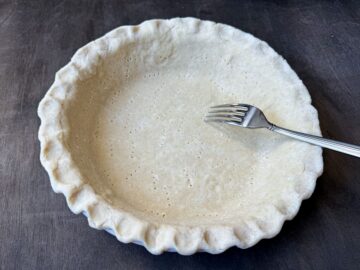
- Place the pan on a parchment paper-lined baking sheet and bake for 20 to 25 minutes, until edges are golden, then carefully remove the parchment and weights.
- Return the crust, still on the baking sheet, to the oven for 5 to 10 minutes, until the bottom looks matte. To blind bake, keep baking the crust until it is completely golden brown. You can add a ring of aluminum foil around the edges if they brown quicker than the center.
- After the crust is finished baking, transfer the pie plate to a wire rack and proceed with your pie recipe.
Leave a Reply