
This Eggnog Pastry Cream is silky and smooth with the flavors of eggnog. It can be used to fill a tart, cake, cupcakes, cream puffs, or as a pudding.
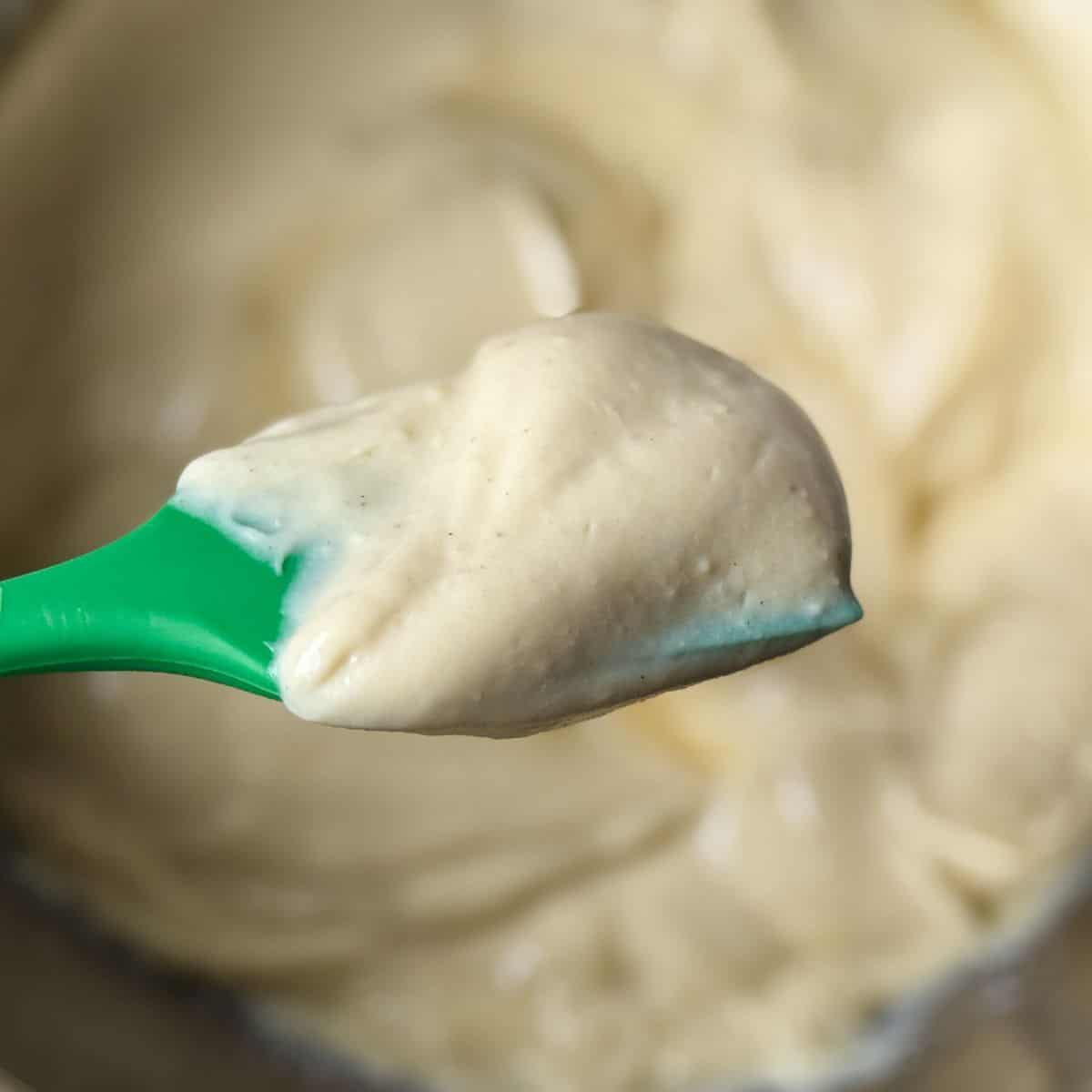
I had been wanting to make Eggnog Pastry Cream for many years. Once I finally decided to tackle it as the filling for a tart on New Year's Eve, I found a recipe that uses store bought eggnog. It seemed to have a lot of thickener in it, but the website appeared reputable and had photos to accompany, so I gave it a try against my better judgement. It was a disaster and ended up really thick and clumpy, so thick it could not even be strained.
I was disappointed because the Vanilla Pastry Cream recipe I use for fruit tarts is so silky and delicious. Like most people, I really don't like wasting my time and ingredients on bad recipes. I have had this problem more often lately with recipe sites using AI to generate content that is untested.
After comparing the bad recipe to others and contemplating how to avoid another recipe catastrophe, I came up with a new plan.
Eggnog is made with milk/cream, sugar and egg yolks; vanilla pastry cream is also made with milk/cream, sugar and egg yolks. The main difference is that eggnog is spiced with nutmeg.
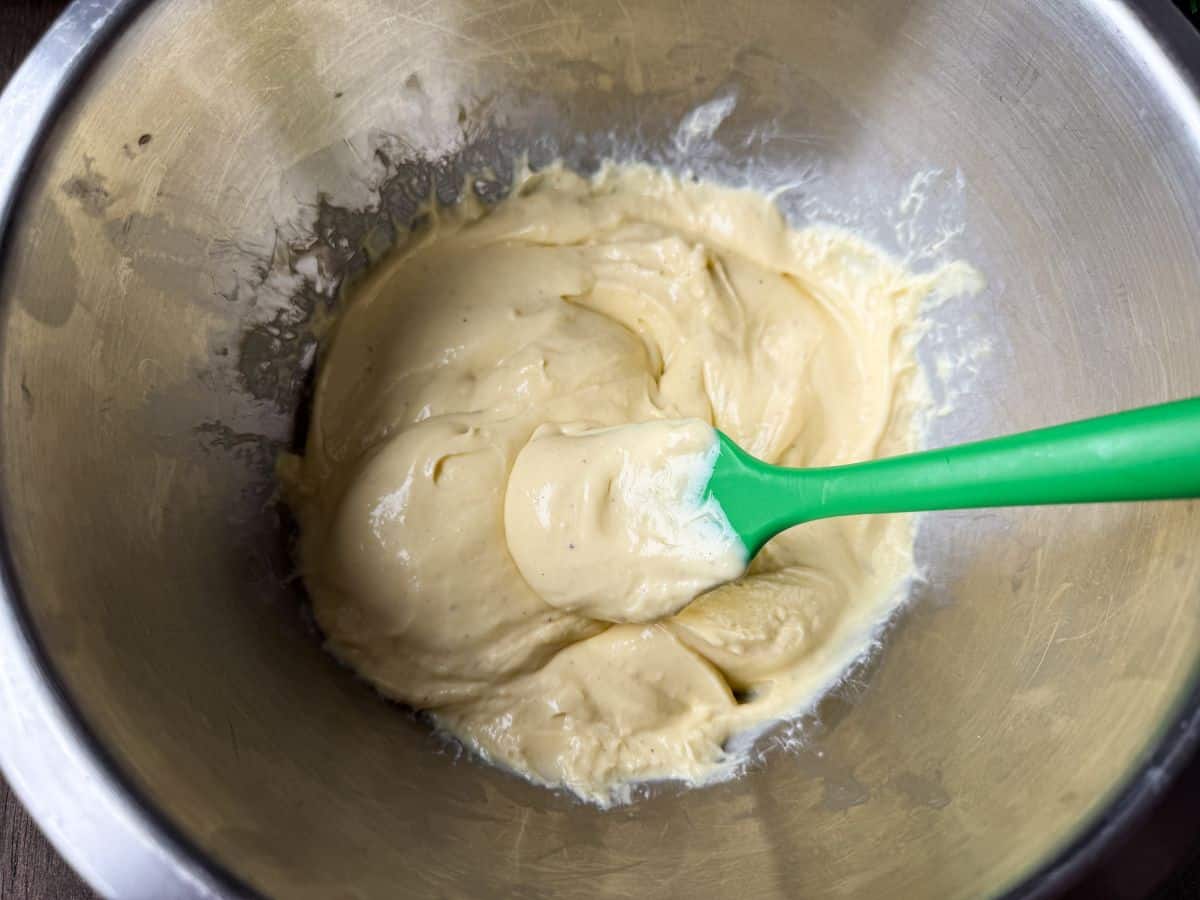
This lead me to the realization that all I needed to make the perfect Eggnog Pastry Cream was to add nutmeg to the Vanilla Pastry Cream recipe, which I know for certain is a great recipe, rather than trying to use store bought eggnog and adjusting ingredient ratios and quantities.
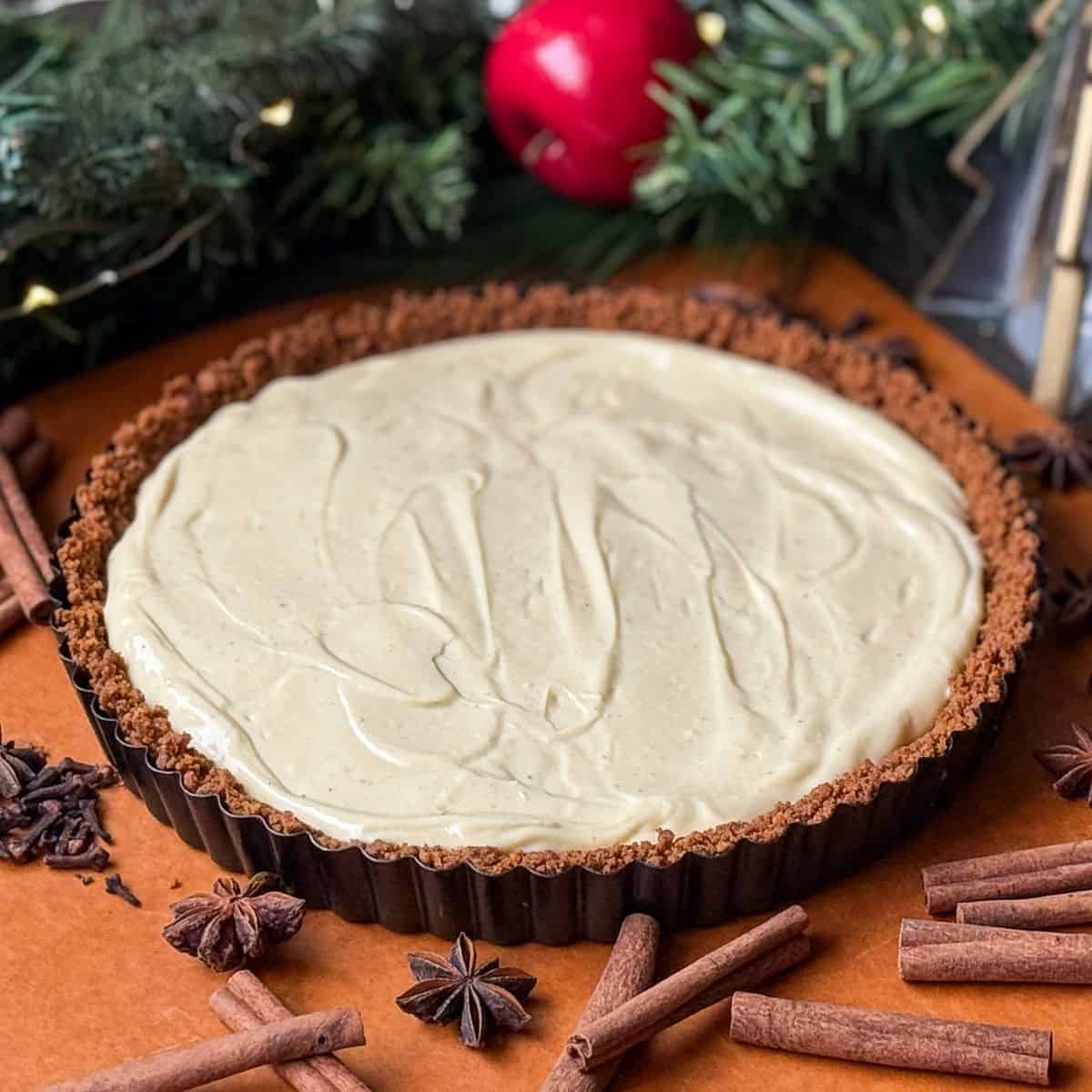
The resulting pastry cream tastes like eggnog and has the texture of an ideal, properly prepared pastry cream. I used the Eggnog Pastry Cream for an Eggnog Tart with a Gingersnap Crust, but it could be served in bowls like a pudding or used as filling for Easy Homemade Cream Puffs or a cake, like a Boston Cream Pie. The possibilities are endless.
Make the Custard
To make a successful pastry cream, I highly recommend having your ingredients and equipment ready to go at the beginning because it can go fast.
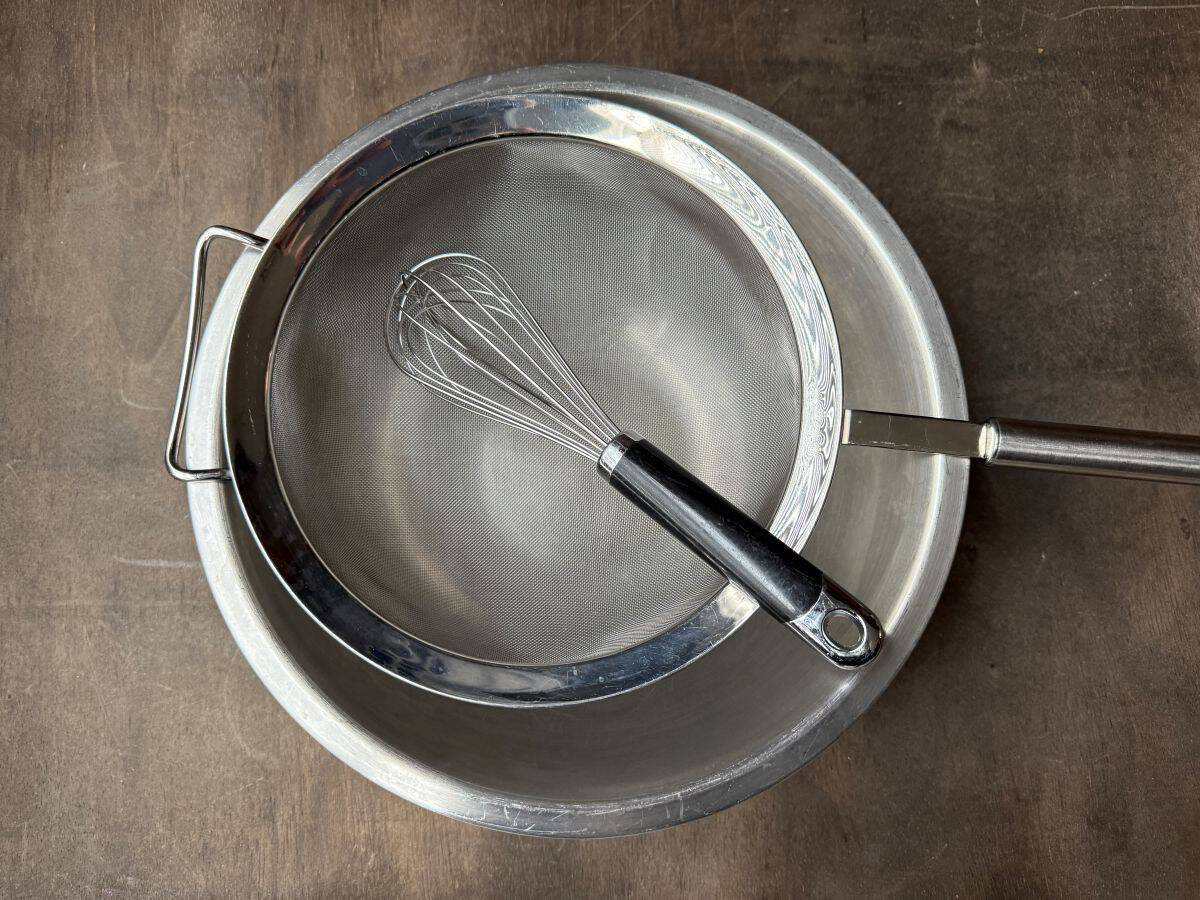
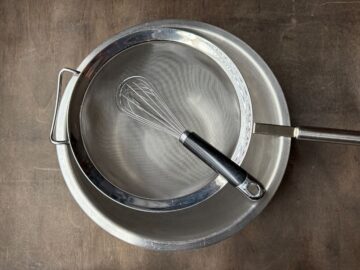
Place a fine-mesh strainer over a bowl and have a wire whisk ready.
Cut the cold butter and measure the vanilla. Set these aside to be added in the last step.
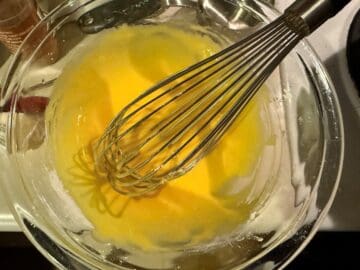
Whisk the egg yolks in a medium bowl, then add the sugar and whisk until it has started to dissolve and the mixture is creamy. Next, whisk in cornstarch until combined and the mixture turns a thick, pale yellow. Set this bowl aside next to the stovetop.
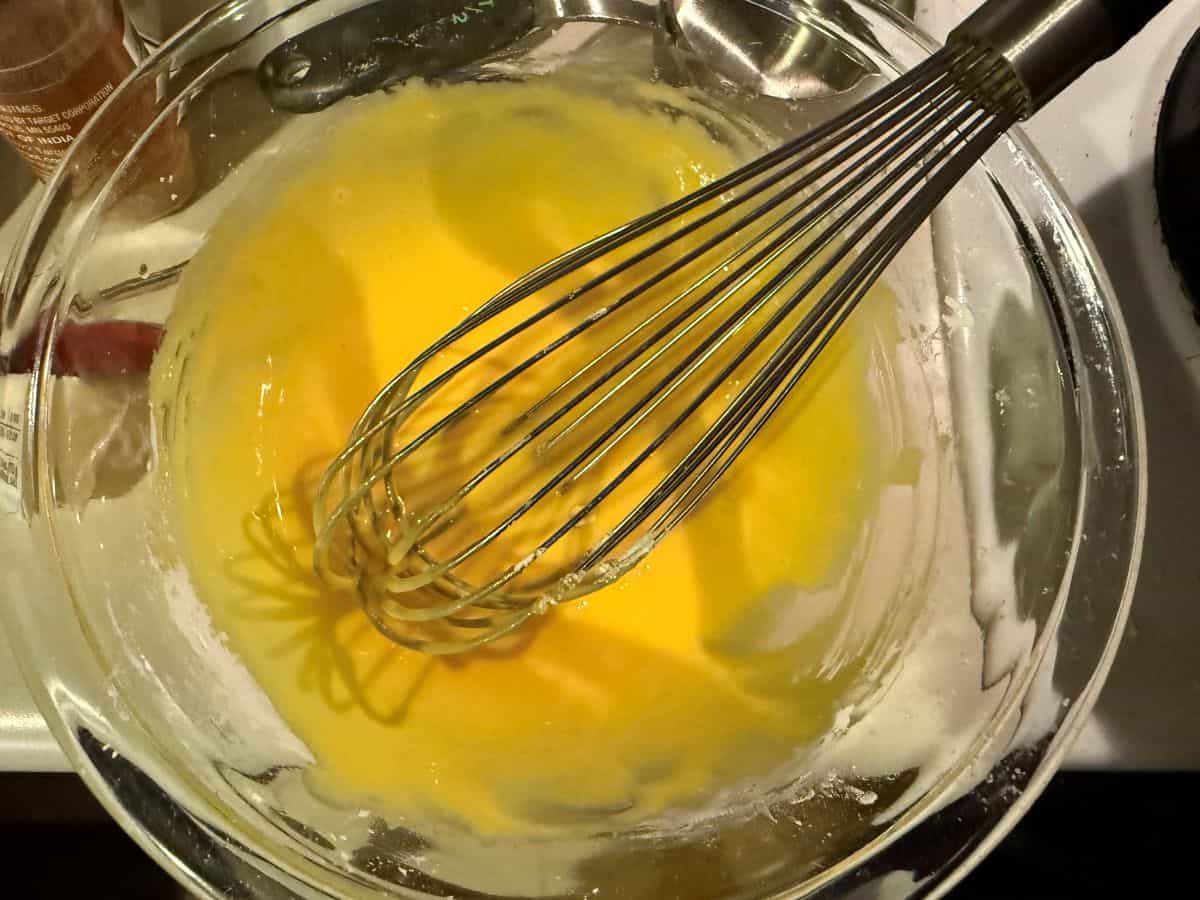
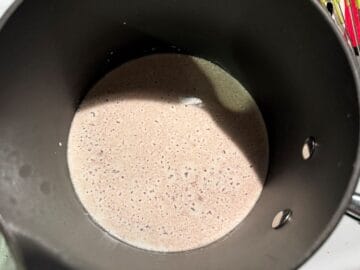
Bring the half-and-half, sugar, nutmeg and salt to a simmer in a medium saucepan over medium heat, stirring occasionally to dissolve the sugar.
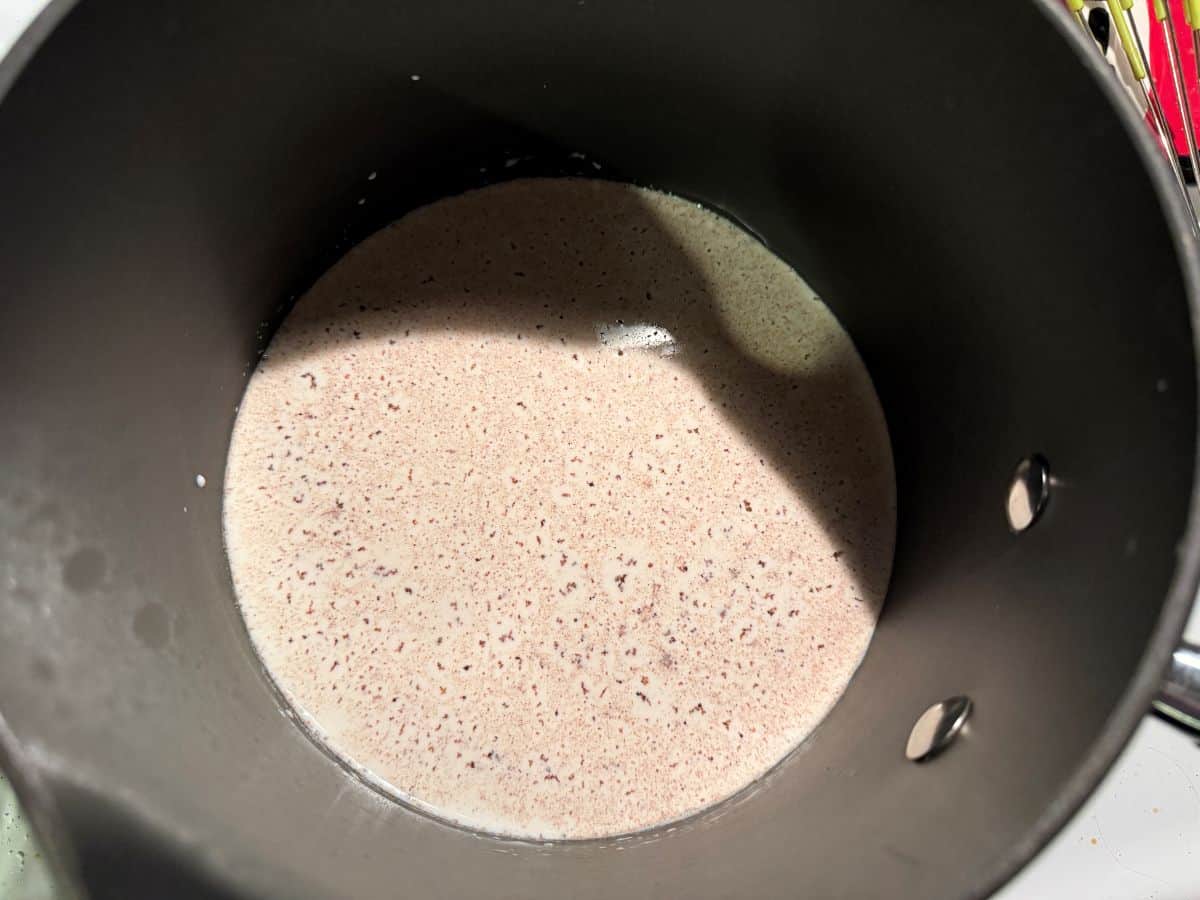
When the half-and-half mixture has reached a full simmer, gradually whisk it into the egg mixture, which will temper it.
Return this combined mixture to the saucepan, making sure to scrape the bowl with a rubber spatula to transfer the entire amount.
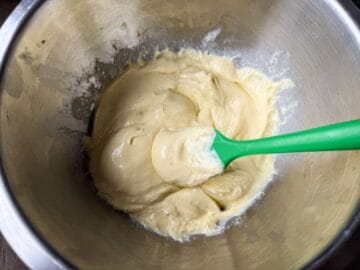
Return the custard to a simmer over medium heat, whisking constantly, until a few bubbles burst on the surface and the mixture thickens and becomes glossy.
The original recipe for the pastry cream indicates this should take around 30 seconds. This always takes longer for me. The important thing is not the actual time but rather that you continue to cook until the mixture thickens. You are aiming for the consistency of pudding.
If it's not as thick as pudding, keep cooking, making sure to whisk constantly. While the refrigeration step will help set the pastry cream, if it's not thick at this point, it won't thicken enough upon chilling. This is why it is necessary to cook until it thickens. If you're wondering if it has thickened, it probably hasn't because it's pretty obvious and happens quickly.
Once you achieve pudding consistency, remove the pan from the heat and whisk in the butter and vanilla.
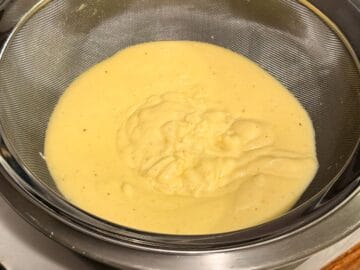
Transfer the pastry cream to the fine mesh sieve set over a medium bowl, whisking it through the strainer to remove any lumps or egg clumps.
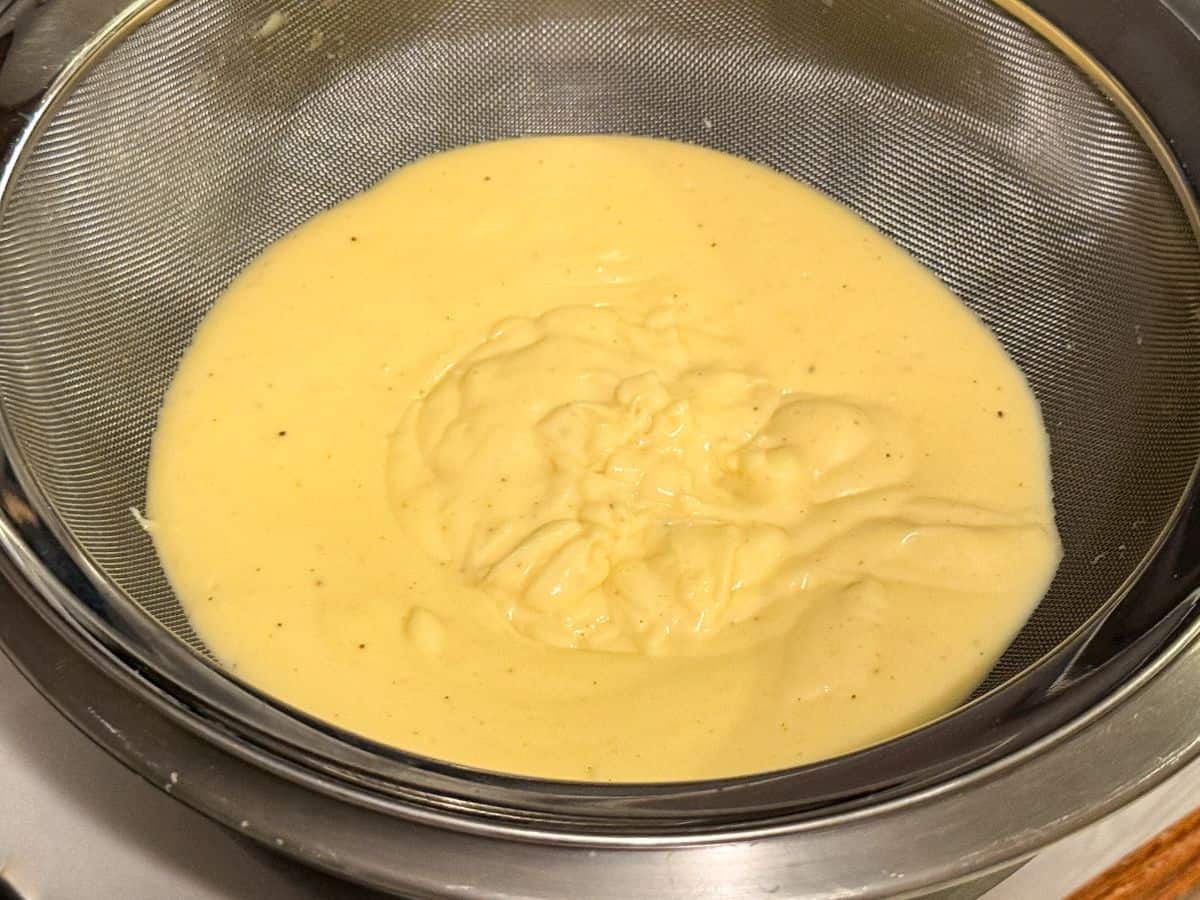
Press plastic wrap directly on the surface of the pastry cream to avoid getting a "skin" on top.
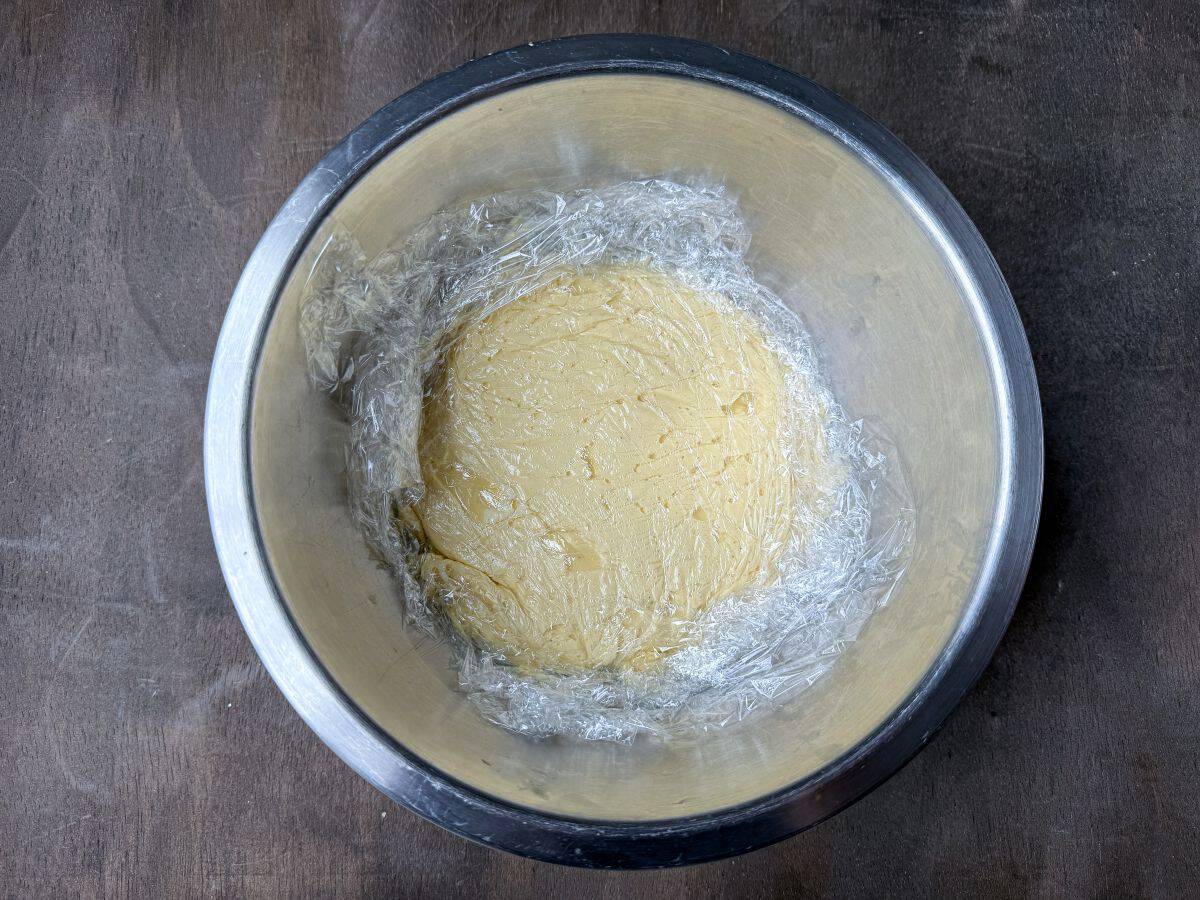
Refrigerate the pastry cream until cold and set, a minimum of 3 hours and maximum of 48 hours.
When you are ready to use it, peel off the plastic wrap.
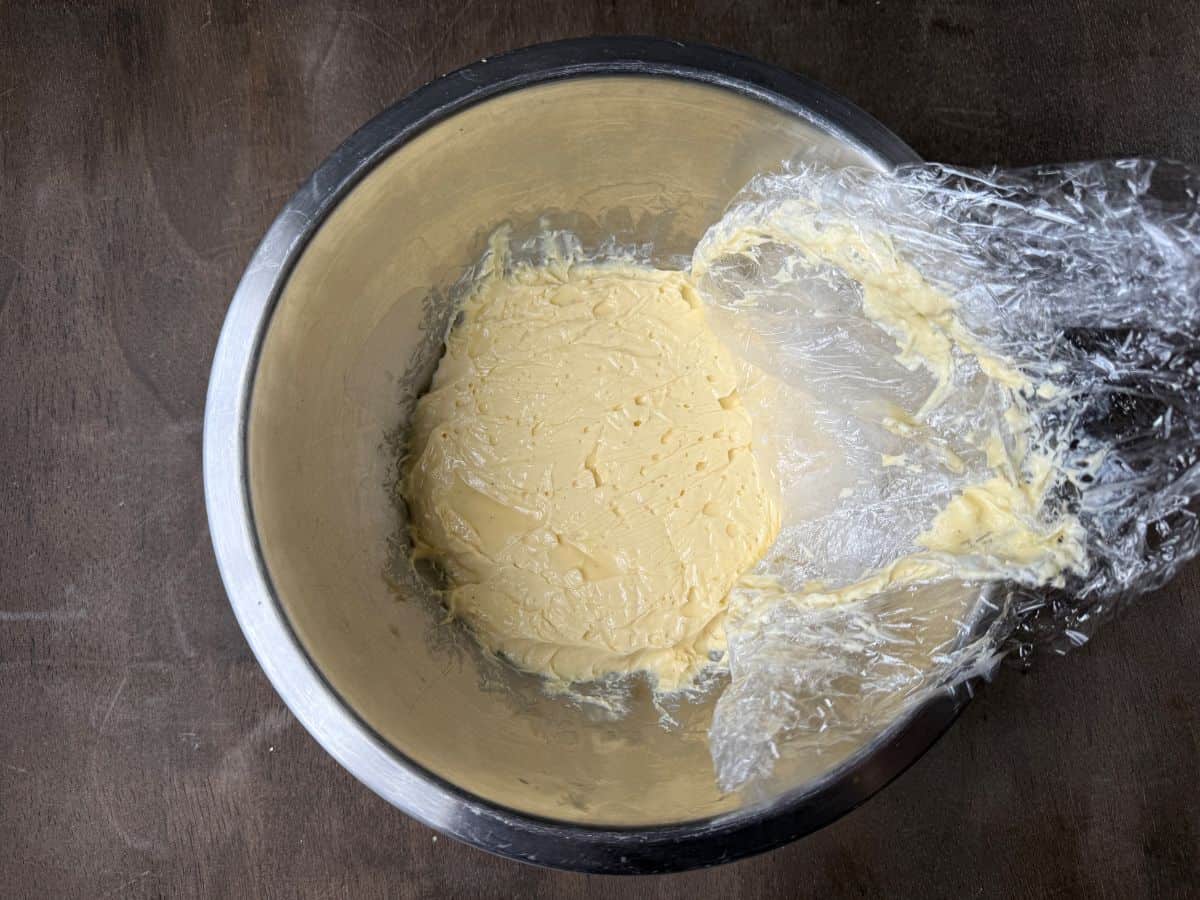
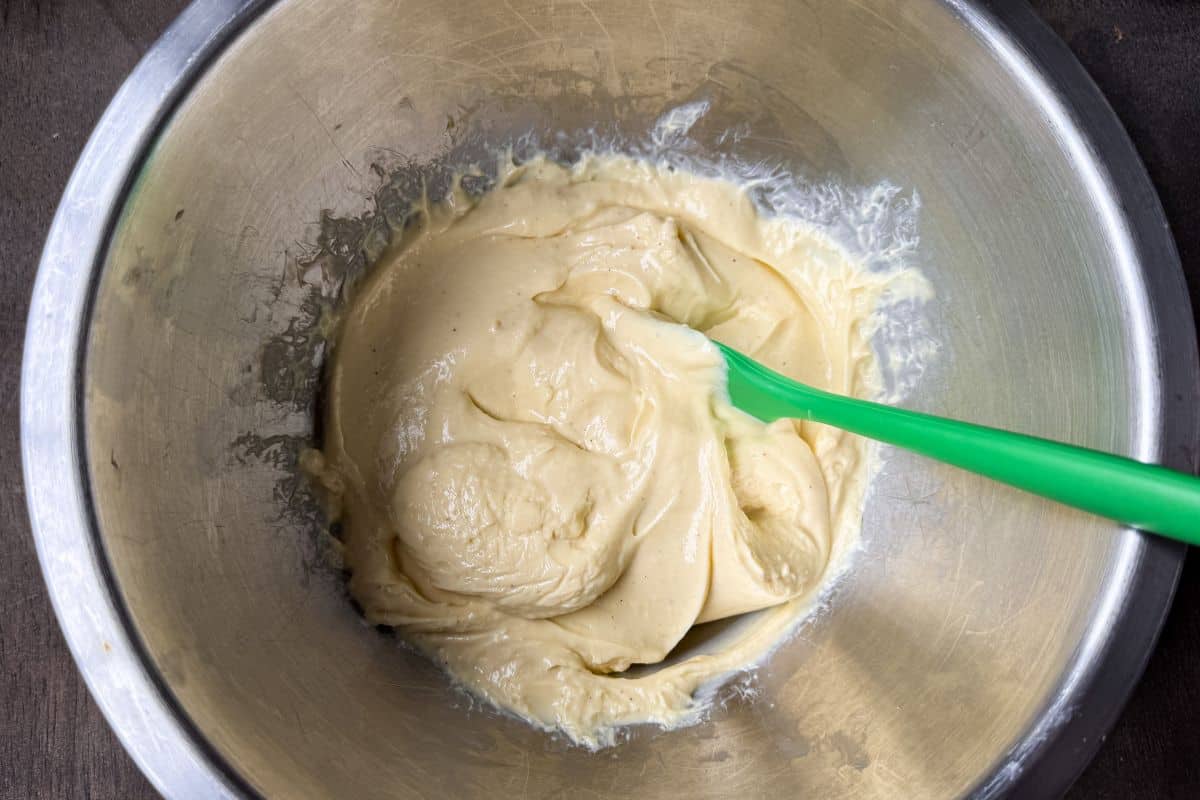
Stir the pastry cream carefully to mix. It is now ready to use.
Storage
Refrigerate the pastry cream in a bowl with plastic wrap over the surface until you are ready to use it. For a tart, I recommend filling it right before serving, not in advance if possible.
Pastry cream should always be stored cold, even if used as a filling for cream puffs or a cake, to maintain the thick texture and prevent it from becoming runny.
Pastry cream can be kept for up to 48 hours.
Uses
This eggnog pastry cream can be used for an Eggnog Tart or to fill a cake, like a Boston Cream Pie, cupcakes, cream puffs, or even served in individual portions as pudding.
Gluten Free Option
This recipe is naturally gluten free. Make sure your brand of cornstarch is certified gluten free.
📖 Recipe
Eggnog Pastry Cream
Ingredients
- 4 tablespoons unsalted butter (cold and cut into 4 pieces)
- 5 large egg yolks
- 3 tablespoons cornstarch
- 2 cups half-and-half
- ½ cup granulated sugar (divided)
- ¼ teaspoon nutmeg
- 1 pinch table salt
- 1½ teaspoons vanilla extract
Instructions
- Place a fine-mesh strainer over a medium sized bowl with a wire whisk. Set this aside.
- Set aside the cut, cold butter.4 tablespoons unsalted butter
- Whisk the egg yolks in a medium bowl then add 2 tablespoons of sugar and whisk until it has started to dissolve and mixture is creamy, around 15 seconds.5 large egg yolks
- Whisk in the cornstarch until combined and the mixture turns a thick, pale yellow, about 30 seconds.3 tablespoons cornstarch
- Bring to a simmer the half-and-half, 6 tablespoons sugar, nutmeg and salt in a medium saucepan over medium heat, stirring occasionally to dissolve sugar.2 cups half-and-half, ¼ teaspoon nutmeg, 1 pinch table salt
- When the half-and-half mixture has reached a full simmer, gradually whisk it into the egg mixture, which will temper it. Return this combined mixture to the saucepan, making sure to scrape the bowl with a rubber spatula to transfer the entire amount.
- Return the custard mixture to a simmer over medium heat, whisking constantly, until a few bubbles burst on the surface and the mixture thickens and becomes glossy. This can take as little as 30 seconds or considerably longer. The important thing is not the actual time but rather that you continue to cook until the mixture thickens until it become the consistency of pudding. If it's not, keep whisking constantly until it thickens. The refrigeration step will help set the pastry cream, but if it's not thick at this point, it won't thicken enough upon chilling. If you're wondering if it has thickened, it probably hasn't because it's pretty obvious and happens quickly.
- Remove the pastry cream from the heat and whisk in the butter and vanilla.1½ teaspoons vanilla extract
- Transfer the pastry cream to a fine mesh sieve set over a medium bowl. Whisk it to force it through and remove any lumps or egg clumps.
- Press plastic wrap directly on the surface to avoid getting a "skin" on top.
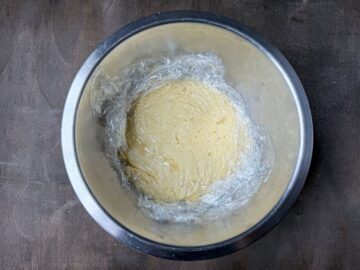
- Refrigerate the pastry cream until cold and set, a minimum of 3 hours and maximum of 48 hours.


Leave a Reply